US regulatory 'turf war is over' - CFTC chair Pham
30th September, 2025
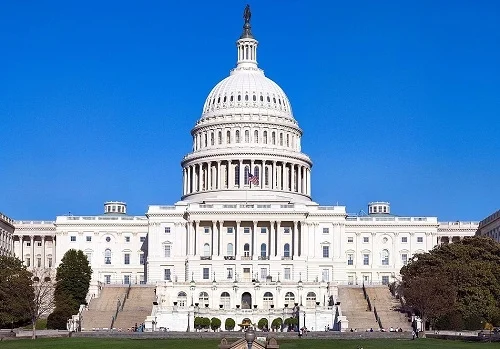
The long-standing rivalry between the Securities and Exchange Commission (SEC) and the Commodity Futures Trading Commission (CFTC) is said to have ended with the CFTC chair suggesting ‘the turf war is over’.
CFTC acting chair Caroline Pham told a joint roundtable on regulatory harmonisation efforts that, while the regulatory lanes weren’t always clear, the two agencies will now work together for the mutual benefit of the financial markets.
At the same event, SEC chairman Paul Atkins said on Monday the focus is on collaboration between the US market regulators, adding that combining the two agencies will ultimately be decided by Congress.
“The era of regulatory fragmentation is ending. The age of harmonised, innovation-friendly oversight is here,” Atkins said.
Together, both agencies can offer investor protection, along with financial innovation, Atkins added.
The acting CFTC chair said she would ‘dispel some of the FUD (fear, uncertainty, and doubt)’ regarding CFTC’s operations on crypto.
Futures Industry Association president and CEO Walt Lukken said that failures to harmonise regulations across these two agencies in the past have resulted in impractical and unstable regulatory structures, most notably in the case of single stock futures.
Lukken also said clear lines between jurisdictions and the avoidance of overlapping regulation will provide regulatory certainty and accountability.
Related topics
Related Articles
All Insights6th October, 2026
Liquid Compute and K8 launch $250m compute financing facility
Liquid Compute and K8 Capital have launched a $250 million (£188.4 million) financing facility for AI compute contracts, as Liquid Compute seeks to develop commodity-style trading, pricing and hedging infrastructure for computing capacity.
Zak Jakubowski

6th October, 2026
PhillipCapital extends Eventus trade surveillance deal
US futures commission merchant PhillipCapital has extended its trade surveillance agreement with Eventus across markets including global futures, options and prediction markets.
Zak Jakubowski

6th October, 2026
UK advances digital gilt initiative with lead manager appointments
The UK Government has appointed Barclays, HSBC, Lloyds, Morgan Stanley, NatWest, and RBC Capital Markets as the joint lead managers for the Digital Gilt Instrument (DIGIT) pilot, who will provide underwriting services, supporting investor engagement for the distribution of the digital bond on the issuance day.
Aravind Bulusu