ASX eyes CHESS modernisation and risk reset after strong FY26 profit growth
13th August, 2026

Strong trading activity in interest rate and energy contracts propelled the Sydney-headquartered exchange to record top-line performance for the 2026 financial year.
Australian Securities Exchange (ASX) on Thursday reported group operating revenue of A$1.25 billion (£653.5 million), representing a 13.3% surge as compared to same time the previous year.
But the statutory net profit after taxes was down by 3.5% year-on-year to $484.9 million. The exchange attributed it to the penalty of A$20.5 million it paid with the Australian Securities and Investment Commission (ASIC) in June regarding misleading statements made in 2022 on the status of the previous Clearing House Electronic Subregister System (CHESS) project.
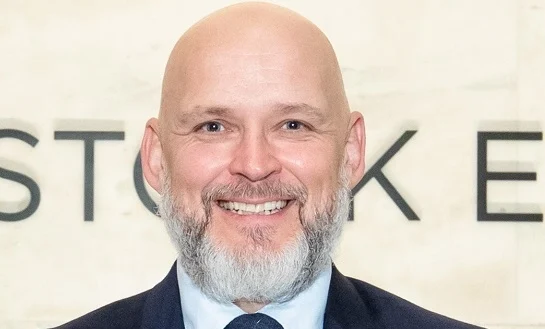
“It has been a highly consequential year for ASX in FY26,” said interim chief executive Darren Yip during the earning call.
“In the past 12 months we navigated significant external scrutiny, while continuing to operate critical market infrastructure through an exceptionally active and volatile period for markets. Against that backdrop, we continued to modernise our technology, introduce new products and serve our customers.”
The exchange’s revenue performance was supported by solid growth from all four of ASX’s business units.
In particular, the derivatives were a primary engine behind the markets division’s 18.6% revenue jump to $414.1 million.
Macroeconomic volatility and changing global central bank interest rate expectations fuelled elevated trading across yield curves throughout the 12-month period ending June 30.
Revenue from futures and over-the-counter (OTC) products climbed 18.4% to $310.9 million, up from $262.6 million in FY25.
Total volume for futures and options on futures surged 14.4% to 223.4 million contracts during the financial year. ASX said that lower average rebates per contract and stronger electricity futures volumes were the key drivers of a 5% increase in the average price per contract for the year.
The exchange in July released its commodities highlights for the 2026 financial year, which highlighted the unprecedented trading volumes for its Australian and New Zealand electricity contracts in the financial year ended June 2026, driven by higher liquidity and electronic trading.
The Australian electricity futures and options market experienced an all-time high average daily volume (ADV) of 1,758 contracts, representing a 44% year-on-year increase.
“Futures and OTC revenue growth was driven by record volumes in interest rate futures and higher volumes in our commodities futures business," noted Andrew Tobin, chief financial officer of ASX, during the earnings call.
Expansion of energy and benchmark reforms
Beyond volume gains, ASX said that it expanded its product suite to address emerging market risk management needs.
The exchange launched new peak electricity derivative contracts, experiencing strong volume gains as energy transition dynamics heightened demand for power hedging instruments.
ASX said that it advanced the deployment of the SOFIA (Secured Overnight Funding Index Australia) rate across products, aligning Australia’s money and derivative markets with global benchmark reforms.
The exchange last month confirmed that on September 28, it will go-live with the SOFIA.
Yip said that one of the exchange’s major achievement during the year was the delivery of CHESS Release 1 in April.
“This was an important milestone in strengthening the foundations of Australia’s post-trade infrastructure, upgrading clearing services to a modern, secure and resilient platform designed to scale for higher trading volumes," he added. "Just as importantly, it has established the foundational enterprise technology platforms, including cloud, data and integration capabilities, that provide a sustainable base for future upgrades and broader technology delivery across ASX.”
CHESS is used by ASX as a core system to perform clearing, settlement and other post-trade services for the Australian equity market.
he second phase of the project, which comprises the exchange’s settlement and sub-register components, is expected to be implemented in 2029.
Speaking on ASX’s priorities for FY27, Yip said the primary focus remains executing on the enterprise-wide technology modernisation roadmap—most notably progressing primary build milestones for CHESS Release 2 toward a late-2027 completion and replacing core futures clearing infrastructure.
The exchange will also focus on five core workstreams to strengthen risk management, governance, and operational resilience.
ASX is positioning itself for future financial market trends through tokenisation, making targeted initial investments to facilitate 24/7 instant movement of collateral via Austraclear, alongside publishing an upcoming market discussion paper on digital asset innovation.
Related topics
Related Articles
All Insights28th September, 2026
ISDA flags tokenised collateral to support 24/7 derivatives trading
The International Swaps and Derivatives Association (ISDA) is working on a proof of concept for tokenised collateral as the derivatives industry considers how collateral and risk management would operate in a shift towards 24/7 trading.
Zak Jakubowski

28th September, 2026
Fragmentation a key challenge for APAC in tokenisation adoption: FOW Asia 2026
Without industry coordination, different regulatory frameworks make it difficult for market participants to agree on how to achieve collateral mobility and capital efficiency through tokenisation.
Karry Lai
28th September, 2026
ICE launches JKM LNG options in gas and power derivatives expansion
Intercontinental Exchange (ICE) has launched new JKM LNG options, LNG freight futures and UK electricity options as the exchange expands its global natural gas and power derivatives offering.
Zak Jakubowski