Fragmentation a key challenge for APAC in tokenisation adoption: FOW Asia 2026
28th September, 2026
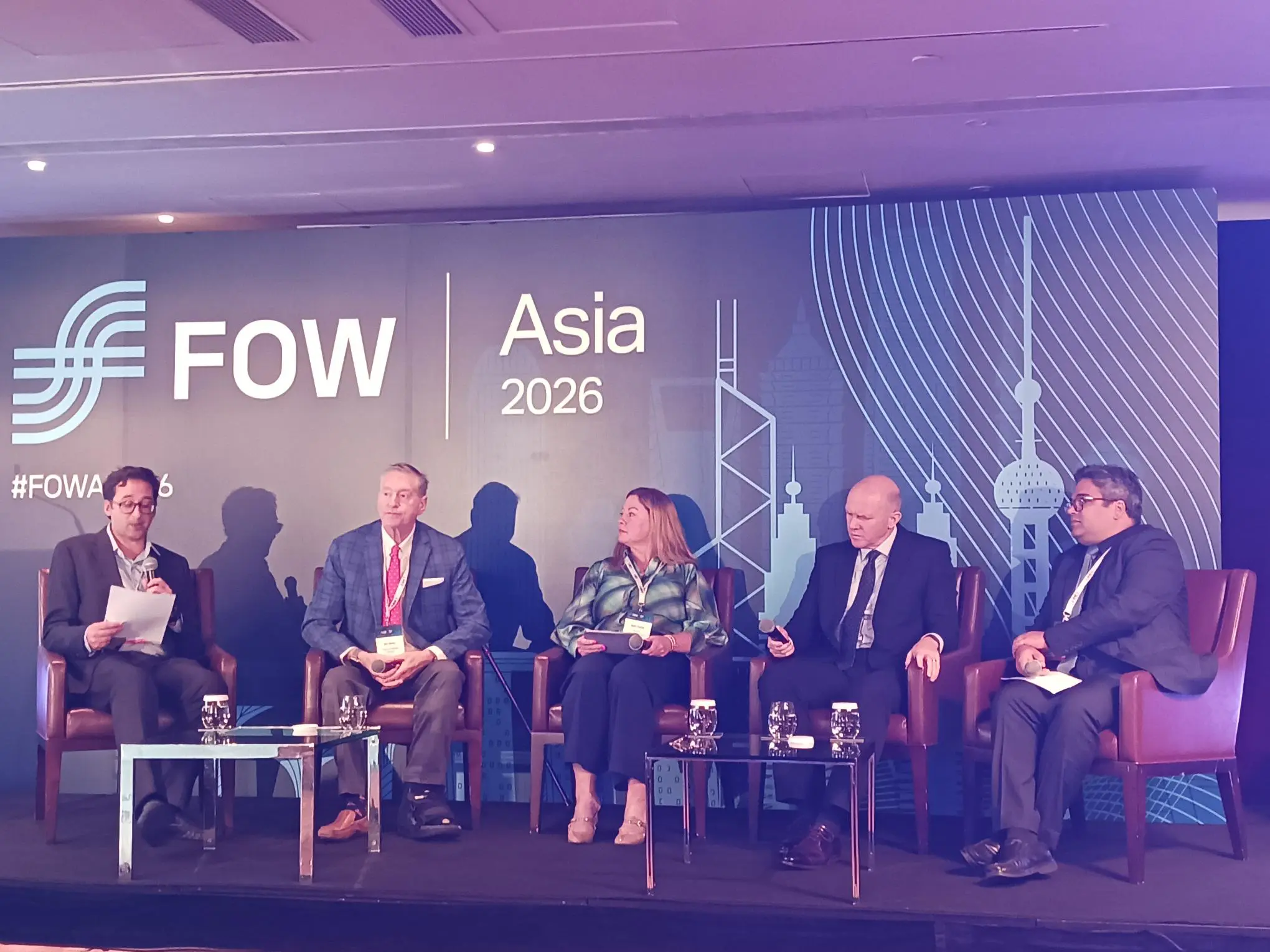
Without industry coordination, different regulatory frameworks make it difficult for market participants to agree on how to achieve collateral mobility and capital efficiency through tokenisation.
Speaking at the FOW Asia 2026 conference in Hong Kong on Thursday, panellists pointed out that trends such as 24/7 trading is helping to push forth the need for faster settlement and collateral mobility through tokenisation but the challenge is both regulatory and industry fragmentation in adoption.
Ruth Ferris, head of securities financing Asia at MUFG, has observed a convergence between digital and traditional infrastructure for tokenisation.
“Both TradFi and DeFi want to achieve collateral mobility, faster settlement and capital efficiency and address the same challenges,” she said.
MUFG piloted a Japanese government bond repo proof of concept in August on the Canton Network.
“We’ve focused on the market infrastructure challenge as opposed to just creating a tokenised asset,” she said. “Repo is one of the most relevant places to start.”
She emphasised that tokenisation shouldn’t just be about digitising assets.
“There needs to be regulatory clarity and settlement finality to make a long-term investment worthwhile,” she said.
At the moment, there are numerous tokenisation platforms that have been created but they’re not “speaking to each other”.
Industry participation and cooperation are key.
“Transformation is only going to take place when custodians, dealers and central counterparties clearing houses all engage together,” she said. “The challenge is going to be how we’re scaling and adopting.”
She noted that in some ways, countries without a full existing infrastructure, such as India, actually have the benefit of not having to deal with legacy systems when adopting tokenisation.
Rishi Kumar, senior vice president – clearing services at Globe Capital Markets, showcased examples of how India’s GIFT City has been piloting tokenisation across a number of initiatives, ranging from real estate to funds and structured debt instruments.
“Taking a top down approach, the Securities and Exchange Board of India has launched a project a tokenised bonds on a private ledger through a clear regulatory framework,” he said.
Bradley Fraser, head of Asia prime derivative services at Barclays, said that compared with the US market, Asia remains fragmented, particularly around collateral types.
“There’s no decision on whether to focus on US Treasuries, Chinese government bonds or Japanese government bonds,” he said.
He believes that Asian jurisdictions are taking a wait and see approach.
What will be essential in bringing stakeholders along for a more unified discussion is the role of industry associations.
“Solutions shouldn’t be dictated and the worst thing to have is proliferation of solutions when we ultimately want more homogeneity that’s fungible across different platforms,” he said.
Offering a perspective on the US, Bill Barry, senior director global business strategy and development at Vision Financial Markets, said that despite the political support for crypto and the Depository Trust & Clearing Corporation’s October launch of its tokenisation service, there remains a lack of industry clarity on tokenisation.
For instance, he pointed out that there’s a lack of clarity in fees for clearing firms on the costs of selling tokenised securities on a blockchain.
“While the movement on tokenisation is going ahead, members like clearing firms are being left in the dark,” he said.
Without the choice of a single blockchain, money will need to be spent on switching from one blockchain to another and with the litigious environment in the US, he won’t be surprised if lack of clarity leads to litigation.
Related topics
Related Articles
All Insights28th September, 2026
ISDA flags tokenised collateral to support 24/7 derivatives trading
The International Swaps and Derivatives Association (ISDA) is working on a proof of concept for tokenised collateral as the derivatives industry considers how collateral and risk management would operate in a shift towards 24/7 trading.
Zak Jakubowski

28th September, 2026
LSEG joins Canton Network as Super Validator
London Stock Exchange Group (LSEG) has been appointed as a Super Validator on the Canton Network, expanding its role in the blockchain network as it develops digital cash settlement infrastructure for institutional markets.
Zak Jakubowski

28th September, 2026
Trading Technologies promotes Jeanniard du Dot to lead margin analytics business
Trading Technologies (TT) has promoted former OpenGamma chief operating officer Maxime Jeanniard du Dot to lead its margin analytics business as the trading technology provider targets growing demand for cross-asset margin optimisation.
Zak Jakubowski