‘We see demand outside of crypto’ - Kraken's Palmer on perpetual futures
19th June, 2026
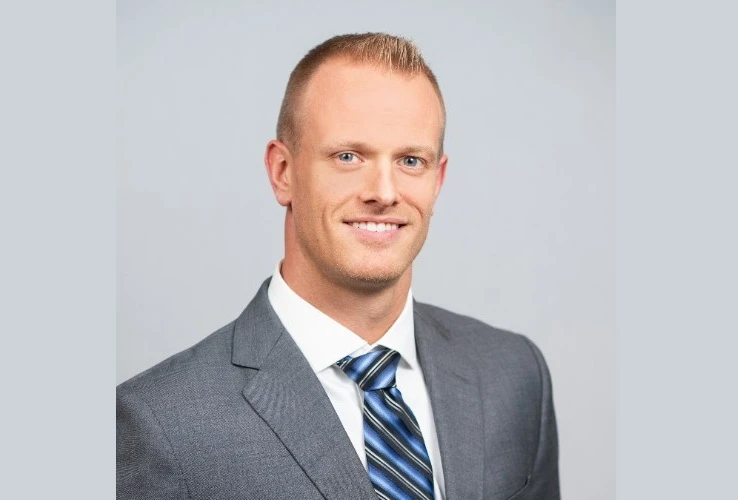
Kraken's global head of derivatives says growing interest in commodity, foreign exchange and equity perpetuals suggests the crypto-native product is evolving into a broader derivatives instrument.
Perpetual futures are beginning to move beyond their roots in digital assets, with traders increasingly seeking exposure to commodities, foreign exchange and equities through the product structure, according to John Palmer, global head of derivatives at Kraken.
"We see demand outside of crypto, and I think we're going to continue to see growth in those products outside of crypto," Palmer told FOW on the sidelines of FIA's International Derivatives Expo (IDX) in London on Wednesday.
Palmer's comments come shortly after Kraken launched US-regulated crypto perpetual futures last week through its recently acquired futures exchange and clearing infrastructure, marking a significant milestone for a product that has historically been associated with offshore crypto venues.
Palmer said the exchange has already begun expanding perpetual futures into other markets outside the United States.
"We launched oil perpetuals for non-US customers last week. We've seen demand there, we've seen other competitors of ours, whether they're centralised exchanges or DeFi exchanges, do the same thing, and we've seen growing volume in that product," he said. "We also offer FX perpetuals to non-US customers today too. We see exposure there."
Kraken also offers perpetual contracts on tokenised US equities through its xStocks product suite for non-US customers.
Palmer said many traders are becoming familiar with perpetual futures through crypto markets before seeking similar exposure across other asset classes.
"I believe we've seen traders that want to gain exposure, put on risk, hedge, whatever it is they're doing, generate alpha, whatever their tool is, use crypto derivatives, perpetuals in this case, because they're simple, they're simple to understand," he said.
"They were maybe the first derivative that they traded, or the first derivative offered in the asset that they used crypto in this case, and now they're saying, 'I really like how this trades, I understand how it works, and I want to be able to trade that now on commodities. I want to be able to trade that now on foreign exchange. I want to be able to trade that now on equities."
Regulatory hurdles remain
Despite growing demand, Palmer said expanding perpetual futures beyond crypto requires regulatory engagement and broader market infrastructure support.
"It's not really a US-focused theme right now, because we're offering that to non-US customers," he said. "That demand is really much more global. I think going back to the first question, we have to find pathways to be able to bring these types of perpetual products to other non-crypto-based assets with regulatory advocacy, working with intermediaries, working with the industry."
He added: "It's not just a, 'Hey, we want to launch oil perps in the US'. Sure, we could try that, but that's not the route that's probably going to provide least resistance and maximum efficiency on launch."
Palmer said bringing regulated perpetual futures to the US required extensive coordination with regulators, futures commission merchants and market makers.
"There was a lot of advocacy that was done. There was a lot of leadership by the CFTC, which we're really thankful for, in the sense of opening the doors and allowing us to bring the product to market," he said.
Convergence with traditional derivatives
Looking further ahead, Palmer said he expects the distinction between crypto and traditional derivatives markets to continue narrowing as products, infrastructure and trading behaviour converge.
"The convergence continues to happen," he said. "More and more assets are going to trade 24/7 and those assets you're going to have 24/7 collateral to post on it - whether that's dollar rails because the banks are operating on the weekends, or it's tokenised versions of it."
He added that by the end of the decade, traders are likely to care less about whether a product originated in crypto or traditional finance.
"I think you'll continue to see this convergence, where it's not 'this is a crypto app' or 'this is a crypto broker' or 'this is a TradFi broker' or 'this is a whatever broker'. It's just going to be your broker, and you're offering access to these products,” he said. "There is no more TradFi crypto, there's products. There's derivatives, and there's products, and you'll be less one versus the other by that time."
Perpetual futures remain controversial in some parts of the traditional derivatives industry. CME Group's outgoing chairman and chief executive Terry Duffy on Thursday said the exchange had filed a lawsuit challenging the CFTC's approval of perpetual futures contracts, arguing that the contracts do not meet the legal definition of a futures product under US law.
Related topics
Related Articles
All Insights17th September, 2026
SEC launches consultation as it confirms ‘innovation exemption’ for tokenised equities
The Securities and Exchange Commission (SEC) has confirmed an exemption for firms looking to support the issuance of tokenised shares, in a further move by US authorities to encourage growth in digital assets.
Radi Khasawneh

17th September, 2026
Saudi derivatives trading tops SAR1bn after market overhaul
Trading on the Saudi Exchange's derivatives market has surpassed SAR1 billion in value and 24,000 futures contracts following structural changes introduced last month to boost liquidity and participation.
Zak Jakubowski

17th September, 2026
EEX launches index-linked gas trading to expand hedging tools
European Energy Exchange (EEX) has launched Trade-at-Index functionality across its natural gas spot markets, allowing participants to trade gas at prices linked to selected EEX indices as the exchange targets more flexible hedging.
Zak Jakubowski