Gold 'financialisation' could diversify India’s capital flows: FOW India 2026
15th October, 2026
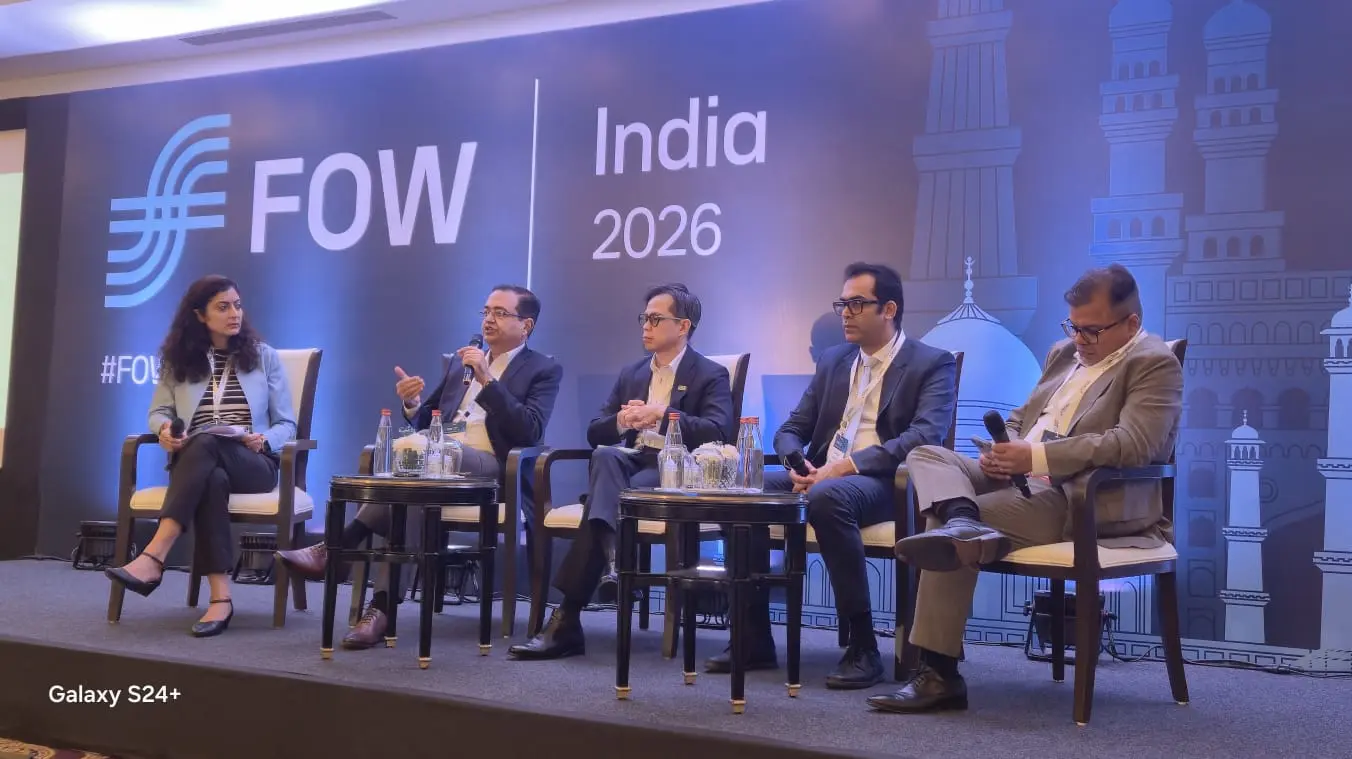
Industry experts call for a flexible regulatory environment and robust risk management practices for the development of Asia’s derivatives markets amidst geopolitical volatility.
Speaking at the FOW India conference in Mumbai on Thursday, Kumar Parmani, head - precious metals, India, StoneX Trading, noted that gold financialisation is rapidly emerging as a critical frontier for India’s capital markets, as policymakers look to unlock vast pools of household wealth.
“I would recommend the government to remove the Goods and Services Tax (GST) from the bullion market,” said Parmani.
“But, if the entire store of gold comes into the system, it will include scrap and India will start financialising gold,” he added.
Echoing his views, Sunil Ramrakhiani, chief business officer, Bombay Stock Exchange (BSE), reiterated that if GST was removed then gold electronic receipts (EGRs) would gain more traction.
“The regulator has been closely working with exchanges and the central government to bring a more structured approach to how it can be managed, so that these products can take off in a bigger way,” said Ramrakhiani.
Speaking at the FOW Asia 2026 conference in Hong Kong in September, panellists said that they are seeing a pickup in precious metals and energy trading in APAC, driven by geopolitics and price volatility.
Tan Say Liang, executive director, head of international sales, APAC, Singapore Exchange Group (SGX), said that the India- Singapore ASEAN corridor will help in establishing an increasingly integrated, two-way ecosystem.
Liang detailed how capital flows, institutional participation, and financial market infrastructure are driving this deeper regional integration.
“Singapore is serving as a gateway for international capital into India. Global asset managers, sovereign wealth funds, hedge funds, and family offices leverage Singapore’s financial ecosystem to structure investments and manage exposure to Indian markets,” he said.
On the other hand, Indian corporations expanding into ASEAN increasingly utilise Singapore as an operational hub for treasury, financial, and liquidity management, with major institutions supporting these cross-border corporate activities, said Liang.
He said that Singapore serves as India’s largest source of Foreign Direct Investment (FDI), accounting for approximately $200 billion (£150.7bn) - roughly 25% of India's total FDI - since the 2000s, alongside bilateral trade exceeding $120 billion.
Market infrastructure is also serving to bring the two regions closer together. Since its launch, the GIFT Connect initiative between Singapore and GIFT City has generated cumulative turnover exceeding $3.5 trillion and over 76 million contracts traded, said Liang.
This connectivity is expanding beyond derivatives into broader investment products.
He said that SGX has plans to list TI Nifty 50 exchange traded fund (ETF) in November, which would provide international investors with an additional channel to access India's economic growth through Singapore.
Meanwhile, SGX, in a LinkedIn post in October, said that stronger institutional positioning drove GIFT Nifty open interest to a record in September, reinforcing SGX Group's role in offshore India risk management.
Related topics
Related Articles
All Insights6th November, 2026
Nasdaq derivatives volumes dip 0.8% to 425.5 million in October
Nasdaq's reported derivatives trading volumes fell 0.8% year on year to 425.5 million contracts in October 2026, compared with 428.8 million a year earlier, as a 22% decline in European options and futures activity accompanied broadly stable US equity options trading, according to the exchange operator's latest monthly statistics.
Zak Jakubowski

6th November, 2026
Eurex derivatives volumes jump 27% in October as rates trading surges 42%
Eurex reported 200 million derivatives contracts traded in October, driven by a sharp increase in interest rate activity, while OTC clearing volumes more than doubled and repo trading continued to expand.
Zak Jakubowski

6th November, 2026
Marex Q3 revenue jumps 53% on market making jump
Marex reported a 53% year-on-year increase in third-quarter revenue to a record $743.2 million (£556.6m), compared with $484.6 million a year earlier, driven by growth across all four business divisions, including market making, clearing and prime services, supported by acquisitions and institutional client wins.
Zak Jakubowski