China steel demand and production expected to dip: SIFW 2026
16th June, 2026
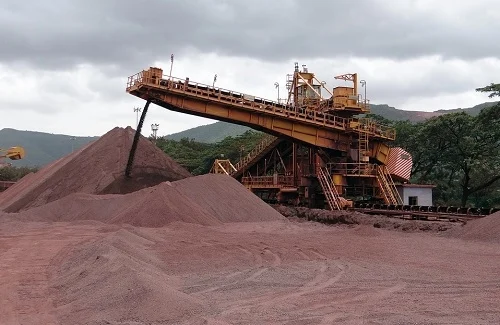
Zhao Jinkui, deputy secretary-general at China Iron & Steel Association looked at the impact of green production and manufacturing shifts on China’s steel industry and pricing.
Speaking at the Singapore Iron Ore and Steel Forum on Tuesday, Zhao Jinkui, deputy secretary-general at China Iron & Steel Association reflected on the key trends in China’s steel industry.
“With a focus on quality rather quantity and a shift to green development, China has seen a decrease in steel consumption and production,” said Zhao.
From January to April 2026, crude steel production stood at 331 million tonnes, a year-on-year decrease of 4.1%.
China’s steel price index stood at 91.73 points, down 3.45% year-on-year as the journey towards eliminating low quality production continues.
“By removing excess capacity, the sector is no longer solely focused on a consumption growth model,” said Zhao.
While construction sector demand for steel has decreased, the demand has shifted towards the manufacturing sector.
For the rest of 2026, Zhao expects steel demand to dip slightly, factoring in a real estate sector that is readjusting, and steady manufacturing growth, led by new energy equipment and ship building.
Looking at the import and export of steel products, Chinese exports have surged for Africa, Latin America and Europe in 2025, rising by over 30%, while Asia, which accounts for 64.5% of Chinese exports, increased by 4%.
Zhao expects the EU’s Carbon Border Adjustment Mechanism, which was launched in 2026, to continue to drive up costs of China steel and downstream products.
However, he’s confident with China’s long-term strategy to tackle costs, including initiatives around low carbon development steel production. He noted that more than 140 enterprises have joined the association’s initiative for energy efficiency best practice for low emission steel production.
Related topics
Related Articles
All Insights15th September, 2026
CME silver futures trade $15m in first 24/7 weekend
CME Group's 100-Ounce Silver futures traded 2,387 contracts during their first weekend of round-the-clock trading, representing more than $15 million (£11.1 million) in notional value.
Zak Jakubowski
15th September, 2026
Trading Technologies appoints Price to lead data and compliance business
Trading Technologies (TT) has appointed former S&P Global executive Katie Price to lead its combined data, analytics and compliance business as the derivatives technology provider brings the operations under a single management structure.
Zak Jakubowski

14th September, 2026
Euronext launches Greek ESG indices during Sustainability Week
The European exchange group has launched two ESG indices covering Greek-listed companies as it expands its sustainable investment offering following the integration of the Athens market.
Zak Jakubowski