APPEC 2026: Freight insurance and cargo premiums weigh on energy companies as Iran war drags on
9th September, 2026
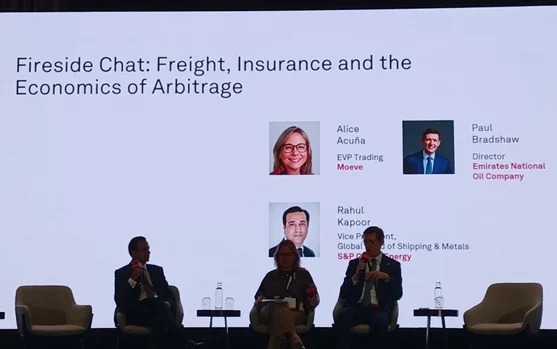
Energy executives said optionality and operational risk management are top of mind and highlight the potential for a new industry-led market for self insurance.
Speaking at the S&P Global Energy APPEC 2026 conference in Singapore on Wednesday, oil company executives weigh in on the role of relationships, optionality and operational risk management as oil supply continues to be disrupted globally.
Alice Acuna, executive vice president trading at Moeve, said that with the weight of geopolitics that is changing oil markets by the hour, there has been a premium that is being placed on optionality and resilience.
“It has been a combination of energy sources, routes and access to storage,” she said.
As a European firm, Moeve has focused on sourcing across the Atlantic but its chemical business relies heavily on the Middle East.
Acuna said that freight insurance was at one point 10 times more expensive than pre-Hormuz disruption but the business’ decision making still focuses on safety and compliance before economics.
She believes that as an industry, there is potential for a new market of self insurance.
“Self insurance would only be relevant if there are enough participants but it’s something that we should consider as an industry and rethink how we can increase resilience,” she said. “A rethink of the rules can help our industry come out of the crisis in a stronger position.”
Even as costs increase, Acuna said that they can’t always be passed on and it’s challenging for energy companies when they can plan ahead only as long as the next announcement comes.
“We have to consider how and where to do business and how to build in logistics under changing conditions,” she said. “There are also infrastructure decisions that we work closely on with governments.”
Paul Bradshaw, director at Emirates National Oil Company, highlighted the differences in freight pricing inside and outside of the Strait of Hormuz as well as those in between.
“There’s been a significant increase of between 10 to 12 times more compared to before,” he said.
Insurance premiums vary depending on vessel type and route, and carry additional war risk premium (AWRP).
“Cargo prices were $30,000 for 7 days pre-war and have gone up to $300,000,” he said. “AWRP for transit through the Strait of Hormuz were zero and now costs 10% of the cargo while cargo insurance is about 5 to 6% of the cargo value.”
He added that some parties have chosen not to insure due to significant cost increases and safety issues.
“Some national companies have taken on their own shipping so they have more control over the ability to exit so it’s not always a money issue,” he said.
In addition managing price volatility and operational risk, Bradshaw emphasised the importance of relationships to ensure trust between parties.
“We’ve had suppliers cancelling contracts and reoffering them on a higher basis,” he said.
Related topics
Related Articles
All Insights6th October, 2026
OCC adds IEX Options as clearing venue
The Options Clearing Corporation (OCC) has begun providing central counterparty clearing and settlement services for IEX Options, taking the US clearing house’s roster of participant venues to 23.
Zak Jakubowski

5th October, 2026
ICE September volumes jump 51% as rates activity surges
Intercontinental Exchange (ICE) reported a 51% year-on-year increase in average daily volume in September, driven by a sharp rise in interest rate derivatives and stronger trading across energy and commodity markets.
Zak Jakubowski

5th October, 2026
ICE launches VLCC tanker and container freight derivatives
Intercontinental Exchange (ICE) has launched new tanker freight futures and container freight options as trading across its freight derivatives markets rises 33% year-on-year.
Zak Jakubowski