ANALYSIS: SGX continues to see growth in commodities suite as it plans new contracts
19th June, 2026

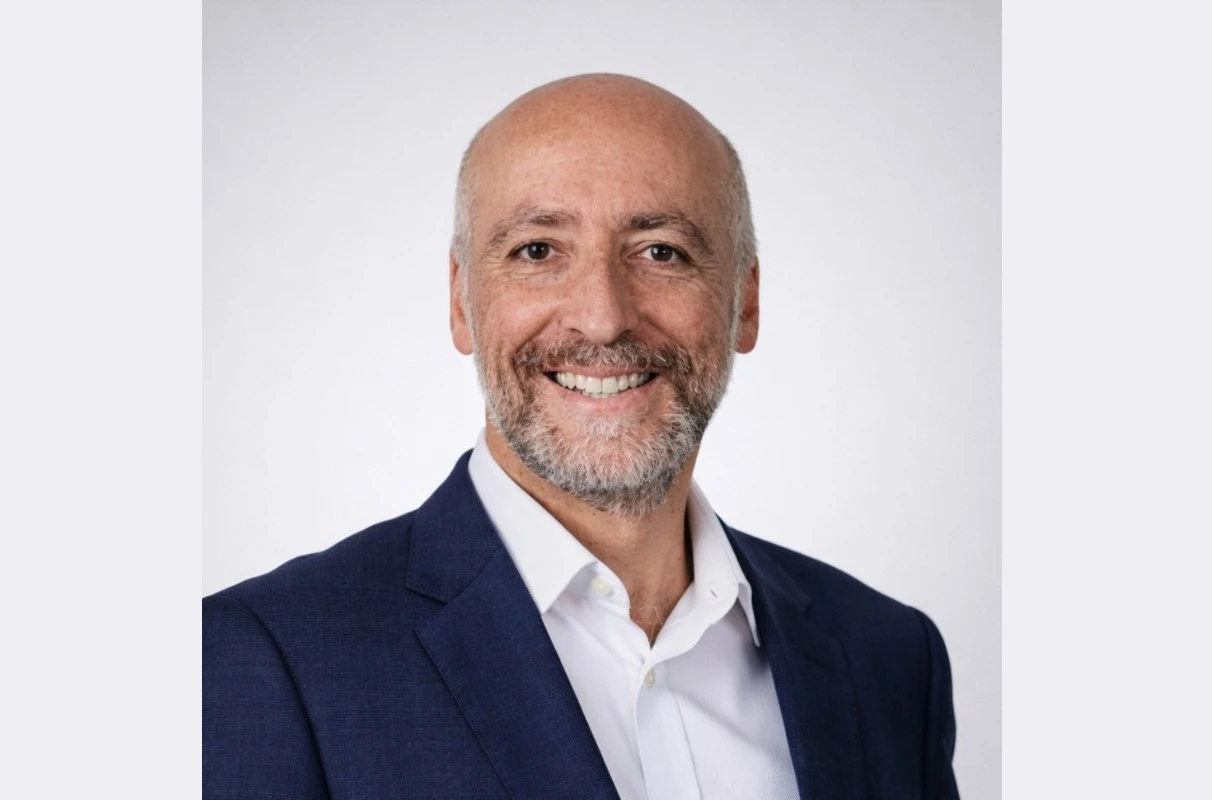
Tan Tee Yong, executive director and head of commodity derivatives at SGX Group, outlined the exchange’s key growth areas as it expands as a global commodities hub.
Tan Tee Yong, executive director and head of commodity derivatives at SGX Group, outlined plans for the exchange to launch new coking coal, steel, gold and freight contracts as hedging demand for the products builds.
While new contracts for both coking coal and steel are expected to be launched, the coking coal contract will likely come sooner.
“India has been a net importer of coking coal and offers a new area of growth for the industry,” said Tan.
Rather than the premium grade hard coking coal, the contract will be geared towards second tier coking coal, which is used by countries such as China for blending. The contract is not available on other exchanges, making it unique to SGX.
“Based on market feedback, there is pricing divergence from premium coking coal, creating basis risk so there’s a need for hedging,” said Tan.
A new steel contract is also in the works to serve the international trading community as SGX looks to expand beyond the existing rebar contract into hot rolled coil steel.
Picking up on the trend of rising interest in gold, SGX is offering over-the-counter clearing for gold by the end of the year and exploring a physically delivered gold futures contract
The exchange is collaborating with both local and international banks for clearing, including JP Morgan, ICBC, Deutsche Bank, UOB, DBS and OCBC.
While other exchanges such as Hong Kong Exchange are also focused on gold, Tan said that Singapore is well positioned to play a bigger role as a trusted node in connecting regional demand with global liquidity in the gold market.
Looking at freight dry bulk, Tan sees it as a complementary sector driver and the “glue that ties global trade together for seaborne movement”.
Tan noted that driven by geopolitical uncertainty, freight price volatility has been higher than usual in recent months. In addition, congestions at Panama Canal have also contributed to elevated freight prices of late. Forward freight agreements hedging activity has increased by 22% compared to the previous year.
SGX is listing a handysize time charter contract on June 22 that focuses on the Atlantic market in response to client demand.
Looking back at the growth of one of its key contracts, iron ore, Tan said 2016 marked the start of wider usage, including by financial participants. The product was further developed in 2018 when a single commodity index under the S&P GSCI was launched and subsequently in 2024 when it was included into the Dow Jones Commodity Index.
“Further collaboration with index providers is under discussion,” said Tan.
The exchange is also working with SummerHaven Investment Management to develop an iron ore exchange traded fund.
In terms of participants, Tan said that compared to 2009 when the majority of trading was done by physical trade participants, by 2016, it was clear that there was a shift towards a broader participant mix and this has been further driven by index investing.
“Financial institutions used to make up 29% of the trading in 2020 and now that has risen to slightly over 50%,” said Tan.
Participation rate of those outside of Asia increased, particularly from Europe, going from around 17% in 2020 to more than 30% as on screen trading drove trading volume.
As for options, SGX continues to push for greater adoption beyond the 12% contribution in volume today.
Another product that has seen record volume is rubber.
“It’s an interesting market where rubber trees take seven years to mature for tapping and prices last peaked in 2011,” said Tan. “After a prolonged period of depressed pricing from oversupply conditions, fundamentals seem to be firming up and prices have been on an uptrend recently.”
Night trading session for the rubber contract has attracted strong interest since it was introduced in January.
The session makes up around 15% to 18% of volumes, offering arbitrage trading opportunities with Chinese onshore exchanges.
Related topics
Related Articles
All Insights16th September, 2026
DTCC Fund/SERV adds Ondo as first tokenisation member
The Depository Trust & Clearing Corporation’s (DTCC’s) Fund/SERV platform has added Ondo Finance subsidiary Oasis Pro Markets as its first tokenisation member, creating a link between tokenised investment funds and traditional US fund distributors.
Zak Jakubowski
16th September, 2026
LME to launch electronic copper options in March 2027
The London Metal Exchange will launch electronic copper options trading on LMEselect on March 30, 2027, as the exchange moves ahead with plans to modernise its options market.
Zak Jakubowski
16th September, 2026
Fastmarkets taps TMX Trayport for lithium market infrastructure
The commodity price reporting agency is extending its role in lithium from benchmark pricing into the market infrastructure used to discover prices and initiate physical trades, with TMX Trayport providing the technology for that expansion.
Narayani Srinivasan