ANALYSIS: Indonesia’s new commodity exchange faces challenges
25th August, 2026
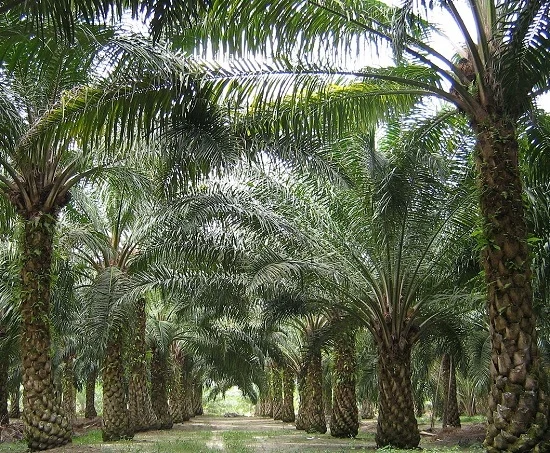
An edible oil trader at a palm oil company said that Indonesia’s ever-changing export policies make it challenging for traders to participate in a new commodity exchange that is expected to launch in January 2027.
In a move aimed at raising the profile of Indonesia in global commodity pricing, president Prabowo Subianto announced earlier this month that a new commodity exchange will begin operations on January 1 2027 and will cover the country’s main exports such as palm oil, nickel, coal, tin and coffee.
Rules for the new Strategic Mineral and Commodity Exchange are expected to be introduced by September 17. However, an edible oil trader at a Malaysia headquartered palm oil company told FOW that he doesn’t believe the new exchange will have much impact.
“The new commodity exchange will be based on the Indonesian rupiah which has been depreciating,” he said. “Indonesia’s export policies keep changing, are protectionist and aren’t friendly to the market,” he said.
The ever-changing policies make it challenging for raw materials exporters. A controversial plan to centralise the export of commodities such as coal, palm oil and ferroalloys through a state controlled entity was scaled back in June after exporters and buyers raised concerns.
“Given these past actions, the uncertainty affects the market,” he said.
In contrast, the oil trader emphasises how Malaysia’s export policies have always been consistent.
“Malaysia’s palm oil derivatives offer physical delivery but it’s uncertain whether Indonesia’s derivatives market will allow for the same flexibility,” he said.
He noted that while the Indonesia Commodity and Derivatives Exchange (ICDX) has local crude palm oil (CPO) derivatives, they’re “hardly traded”.
“For traders doing hedging, it needs to be easy for them to put money in and take money out but I’m not sure that’s going to be the case for the Indonesia market,” he said.
Indonesia currently has two privately owned commodity futures exchanges: Jakarta Futures Exchange and ICDX spanning products such as gold, tin and palm oil.
The physical CPO market was launched in 2023 but it hasn’t caught up to Bursa Malaysia’s long-standing FCPO market.
As the world’s largest palm oil exporter, accounting for more than half of global palm oil exports, Indonesia’s energy policies have a major influence over edible oil prices.
The B50 fuel mandate, a blend of 50% palm-based diesel and 50% regular diesel, began implementation on July 1.
The oil trader said that the biofuel mandate has resulted in a support of prices as it means less palm oil for exports and food.
Together with the impact of the US-Iran war, edible oils prices have been kept high.
“The effects of El Nino on edible oil prices are also attracting speculators like hedge funds,” said the oil trader. “The impact of lower production from El Nino and Indonesia lowering supply have pushed up palm oil prices.”
Palm oil prices currently hover at around MYR 4946 (£897) per tonne, the highest in the past 12 months since they last peaked at MYR 4839 per tonne in April.
Related topics
Related Articles
All Insights9th October, 2026
JPX reports record trading for micro equity futures as retail demand surges
The all-time high trading volume was driven by demand for smaller-sized positions and more precise risk management supported activity.
Narayani Srinivasan

9th October, 2026
Crypto derivatives positioning rebounds in Q3 as open interest climbs 55%
FalconX said derivatives exposure across institutional venues rose sharply in Q3 as crypto prices rallied, even though trading volumes remained below last year’s levels.
Narayani Srinivasan
9th October, 2026
LSEG expands CMC Markets access to advanced financial data
London Stock Exchange Group (LSEG) will deliver its comprehensive suite of market data including real-time and delayed pricing, news, corporate actions, reference data and analytics to reinforce CMC Markets' multi-asset platform infrastructure, as part of a strategic collaboration.
Aravind Bulusu