Algo trading, risk appetite pivotal to equity derivatives trading: FOW India 2026
15th October, 2026
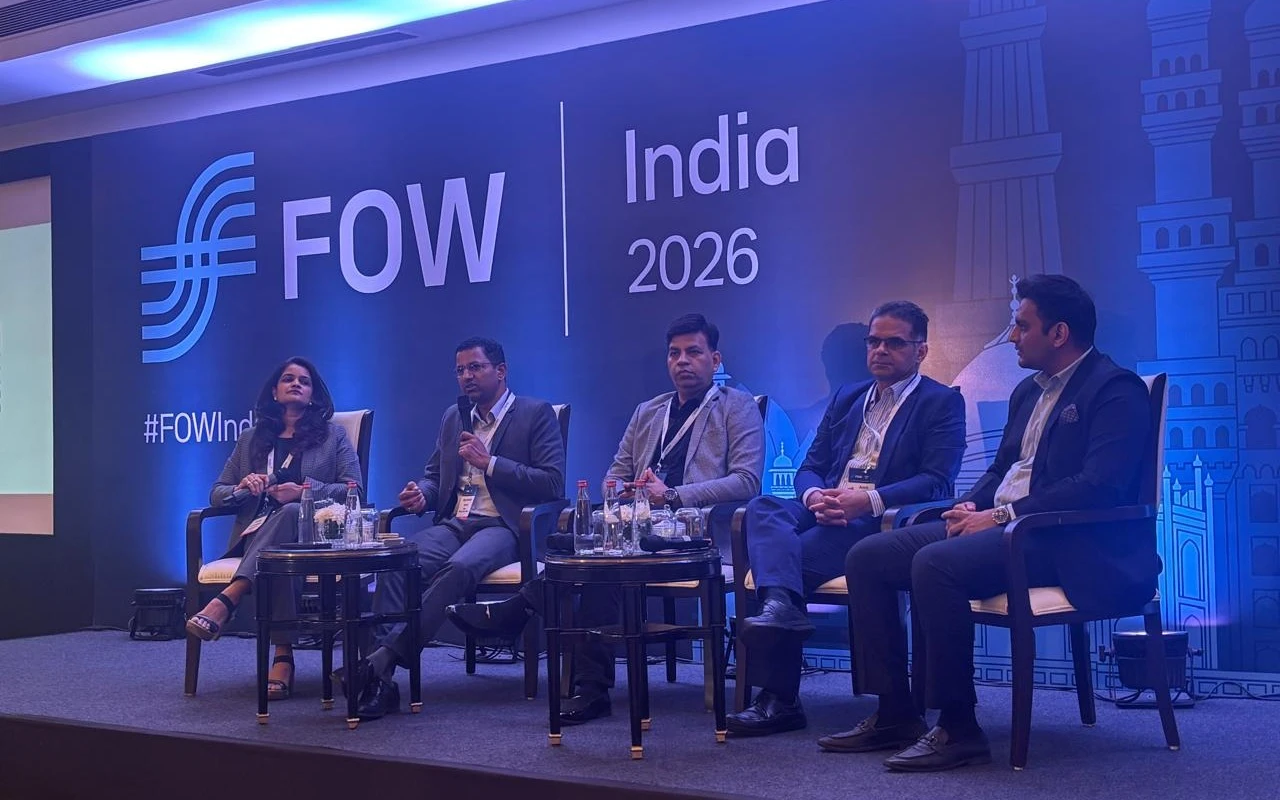
Experts emphasised the critical need to understand individual risk appetite, refine trading strategies, and leverage technology to adapt to algorithmic trading behaviours in the Indian equity derivatives market.
Speaking at the FOW India 2026 conference in Mumbai on Thursday, panellists highlighted that the ultimate objective of trading applications which use artificial intelligence (AI) and algorithmic features is to allow clients to better understand their risk appetite, without constraining investors from executing their strategies.
Amar Singh, senior vice president, Equity, Commodity & Currency at AngelOne, said: “Investors should make informed decisions amid the surge in trading suggestions by social media influencers. Derivatives are not easy to understand. The Securities and Exchange Board of India (SEBI) has been reaching out to investors to update them on the nuances of the dos and don’ts of derivatives trading. Mere back-testing of traditional derivatives trading strategies may not work without a proper understanding of risk management.”
SEBI in August reported that 87.7% of individual traders continued to incur losses in the equity derivatives segment during FY26, while average loss per trader increased marginally to about ₹117,000 (£930) during FY26.
Jay Gupta, founder, Raise Securities, said: “It is important to democratise the understanding of the market. Algo and AI-based trading shouldn’t just be leveraged for faster trade execution, but to caution investors on whether to execute a trade or not, depending on market conditions and position limits. Trading app intelligence should suggest meaningful trades. At the same time, the technology cannot be too preachy. Trading tools should allow users to understand their own trading pace.”
The National Stock Exchange of India (NSE) in April updated its derivatives trading infrastructure to deliver order acknowledgement in nanoseconds to improve speed, eliminate order lifecycle uncertainty and support high-frequency trading.
Singh emphasised that investors should look at a variety of instruments such as equities, exchange-traded funds, and mutual funds, rather than relying solely on benchmark indices, in order to improve the overall maturity of the market.
National Stock Exchange of India’s International Exchange (NSEIX) on Tuesday partnered with the London Stock Exchange for dual and cross listings across equities, fixed income, exchange-traded funds (ETFs) and derivative products.
Related topics
Related Articles
All Insights6th November, 2026
Nasdaq derivatives volumes dip 0.8% to 425.5 million in October
Nasdaq's reported derivatives trading volumes fell 0.8% year on year to 425.5 million contracts in October 2026, compared with 428.8 million a year earlier, as a 22% decline in European options and futures activity accompanied broadly stable US equity options trading, according to the exchange operator's latest monthly statistics.
Zak Jakubowski

6th November, 2026
Eurex derivatives volumes jump 27% in October as rates trading surges 42%
Eurex reported 200 million derivatives contracts traded in October, driven by a sharp increase in interest rate activity, while OTC clearing volumes more than doubled and repo trading continued to expand.
Zak Jakubowski
6th November, 2026
Marex Q3 revenue jumps 53% on market making jump
Marex reported a 53% year-on-year increase in third-quarter revenue to a record $743.2 million (£556.6m), compared with $484.6 million a year earlier, driven by growth across all four business divisions, including market making, clearing and prime services, supported by acquisitions and institutional client wins.
Zak Jakubowski