AI to act as 'democratiser' for trading: FOW Asia 2026
24th September, 2026
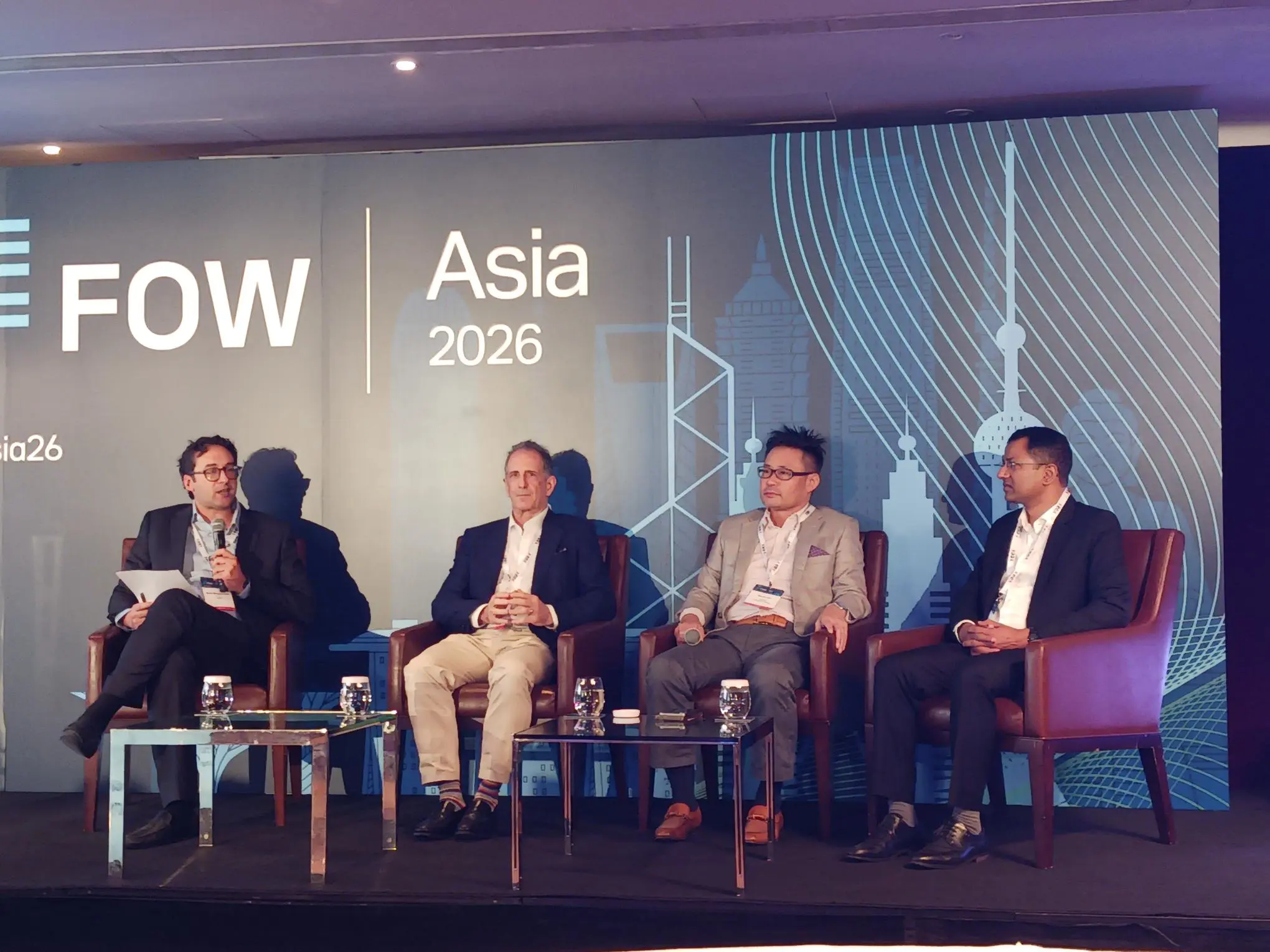
From client engagement to trading, artificial intelligence is levelling the playing field between institutional and retail investors.
Speaking at the FOW Asia 2026 conference in Hong Kong on Thursday, panellists explored how the trading community has adopted artificial intelligence (AI) in their operations.
David Friedland, chief executive officer, Asia Pacific at Interactive Brokers, said: “The power of tools has been growing by the day and there’s a higher bar set with increased automated trading.”
He believes that with increased access to knowledge and information, trading will see a more level playing field between institutional and retail, particularly for younger traders.
Internally, Interactive Brokers has developed a suite of AI tools. For instance, through natural language learning, an AI tool can look at an investor’s portfolio to identify which stocks have not performed well and recommend alternative related stocks that investors might not have known otherwise.
From a resourcing perspective, Friedland pointed out that ensuring that there are enough programmers in place is a challenge as things move fast.
But the real differentiator, particularly when competing with high frequency firms is building systems that are scalable.
Ensuring regulatory aspects, such as security controls, are complied with is also essential. Internally, this means ensuring that no client data is exposed to the outside world.
In terms of safeguards, to prevent excessive trading, surveillance tools to prevent layering and manipulative trading are key.
Looking at the India market, Jayprakash Gupta, founder at Dhan (Raise Securities), said with retail participation of 260 million people, the trading cohort has matured in the country.
“Traders don’t expect an execution broker to provide just execution services but also intelligence,” he said. “The retail investor is now matching the institutional grade investor. In the last decade, what’s been a privilege for institutional is what the retail investor can have today. AI needs to be part of execution and it’s become a necessity to survive and scale.”
With 3.6 million clients in India, Dhan’s clients come from various geographies and languages. One interesting use case of AI is for customer service quality where the tonal quality of customers is captured to support with improving agent performance.
Capturing information asymmetry remains a key competitive advantage, Gupta said, but the bigger challenge to figuring out how to make money and finding alpha as AI is increasingly adopted and the asymmetry is minimised.
Looking back at the last two years, Straits Financial Group started AI adoption through a piecemeal manner, starting from operations to save costs and to streamline workflow but for the front office, it depends on the desk.
“AI has become the great democratiser as clients of different size and maturity adopt AI,” said Kevin Tan, group chief commercial officer at Straits Financial Group.
For institutional clients, there’s a big emphasis on enterprise security when it comes to AI strategies.
He noted the nuances between the use of AI at the front and back ends of the firm as well as in vanilla and exotic pricing.
For exotic pricing, it remains very human intensive, as it’s based on research and various sources of data points. This is particularly evident for commodities, which is a big focus for Straits, as unverified data is common.
Related topics
Related Articles
All Insights7th October, 2026
Nodal power futures volumes rise 31% in September
Nodal Exchange reported growth across its power, environmental and natural gas derivatives markets in September, with power futures volumes rising 31% from August.
Zak Jakubowski

7th October, 2026
Eurex derivatives volumes jump 45% in September
Deutsche Boerse-owned Eurex reported a 45% year-on-year increase in listed derivatives volumes in September, driven by a 61% rise in interest rate derivatives as activity also increased across its OTC clearing and repo businesses.
Zak Jakubowski

7th October, 2026
Arcesium integrates MarketAxess data into fixed income platform
Arcesium has integrated MarketAxess pricing, liquidity and transaction data into its investment management platforms, expanding the fixed income data available to hedge funds, asset managers and capital markets firms.
Zak Jakubowski
