Rates and gold highlight growing role of Asia in global portfolio construction
21st September, 2026
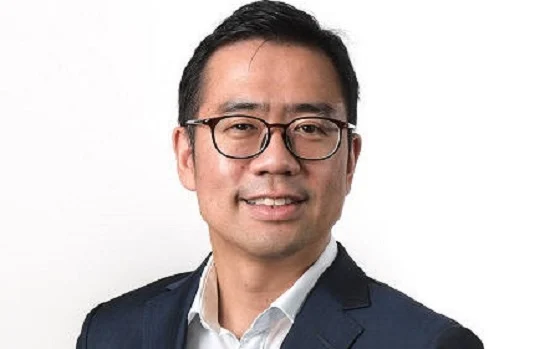
Singapore Exchange aims to capture investor interest in rates derivatives and gold amid persistent volatility.
The Japanese yen has experienced sharp volatility as it went from a 40-year low in July to a seven-month high in September before plummeting last week to its weakest since September 3 following a rate hike.
With the Bank of Japan hiking rates to a 31-year high at 1.25% on September 18 and Japan’s benchmark 10-year government bond yield hitting 3.035% on September 15, the attention of global investors has been further drawn to Japan.
William Chin (pictured), head of rates, derivatives, SGX Group said: “It’s not just the headline yield in Japanese government bonds (JGB), but what it represents with monetary policy colliding with the fiscal arithmetic of a highly indebted sovereign. It is a reminder of Asia’s systemic importance in global portfolio construction.”
Two-way rates are bringing back price discovery and volatility to a market previously dominated by the “widow-maker” one-way trade, Chin added, referring to the shorting of Japanese government bonds in expectation that bond prices would fall.
“With global rates remaining elevated alongside expectations of further Bank of Japan rate hikes driven by inflationary pressures, the economics of the yen carry trades are also changing as Japan moves further away from the ultra-low rate regime that made yen the world’s pre-eminent funding currency,” said Chin.
The yen carry trade refers to the borrowing of yen with low interest rates and using it to buy foreign currency to invest in higher yield assets.
Mini JGB futures volume on SGX reached 83,460 contracts in August 2026, a year-on-year increase of 373%, while open interest increased 29% from 7,802 lots in August 2025 to 10,045 lots in August 2026.
SGX daily average volume (DAV) in JGB futures has continued to rise steadily given renewed interest from the global investor community. DAV in 10-year mini JGBs reached 4,173 contracts in August and 5,868 contracts in September.
From a product perspective, beyond 10-year JGBs, SGX has seen increased interest in 20-year JGBs and Tokyo Overnight Average Rate (TONA) futures as investors seek to express views across the Japanese rates curve.
TONA DDAV reached 2,186 contracts in August and 1,372 contracts in September.
Across wider Asian government bonds (AGBs), Chin highlighted growing rates dispersion as economies move through increasingly differentiated monetary cycles.
For instance, while rates in India and Malaysia rates remain relatively stable, the Philippines and Indonesia have begun to cut rates.
Policy trajectories are creating opportunities for both outright and relative value rates strategies.
SGX in April launched AGBs across India, Indonesia, Malaysia, Thailand and the Philippines.
“Rather than navigating different market structures and access regimes in the underlying cash markets, futures provide an efficient way for investors to express tactical views and capture these dispersion opportunities,” said Chin.
Much like rates, gold is becoming increasingly important as a macro asset in Asia, reflecting demand for diversification, reserve assets and geopolitical safety.
Through the clearing and vaulting of physical gold, Singapore is positioning itself as a complementary global hub for gold, as a trusted trading and storage node for both Asian and global demand, including central bank reserves.
With initiatives such as the clearing of spot gold, which SGX aims to launch by the end of the year, the exchange seeks to support physical demand, deepen price discovery, and establish Singapore as a trusted trading and clearing node in the Asian time zone.
Related topics
Related Articles
All Insights23rd October, 2026
SGX, Philippine Stock Exchange partner to boost cross-border capital and connectivity
The exchanges will assess depository receipts, thematic exchange-traded funds (ETFs) and closer market access as they seek to broaden investment opportunities across the two markets.
Narayani Srinivasan

23rd October, 2026
HKEX launches AI, semiconductor indices to expand technology product suite
The new benchmarks add targeted exposure to Hong Kong-listed technology companies as the exchange seeks to build out its range of index-linked investment products.
Narayani Srinivasan

23rd October, 2026
Weekend banking access holding back institutional 24/7 trading - CME’s Fitzpatrick
CME Group’s incoming chief executive says retail demand is driving interest in round-the-clock access to markets, but banks’ ability to move capital over weekends remains a key constraint on wider institutional adoption.
Narayani Srinivasan
