FIA’s Lukken backs resilient clearing systems as markets move towards 24/7 trading
16th June, 2026

The trade association's president and chief executive has said that the shift towards round-the-clock trading has exposed systemic weakness in clearing and settlement infrastructure.
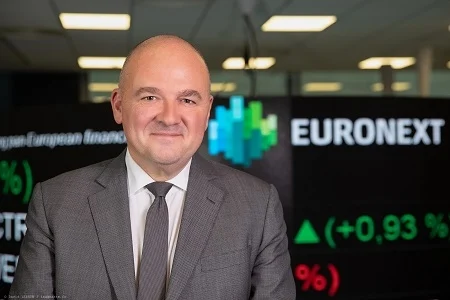
Delivering the opening remarks at the 2026 FIA International Derivatives Expo (IDX) event in London on Tuesday, Walt Lukken (pictured) said that the shift towards 24/7 trading is driven by crypto exchanges, changing retail participation and advancement in market technology.
“But let’s not bury the lead: continuous trading is the easy part. Clearing poses the greater challenge,” said Lukken.
He cautioned that the current clearing systems are constrained by wholesale payment rails that are not fully functional outside standard settlement windows. This constrains the ability to manage the risks of around-the-clock trading, he added.
“A 24/7 market without 24/7 risk management is not progress. It’s a vulnerability,” said Lukken.
To address this, the FIA chief stressed on the need to coordinate with exchanges, clearinghouses and regulators on risk controls and market protections.
Lukken also pointed to tokenised assets and collateral as a potential pathway to reducing settlement friction and improving the speed and efficiency of post-trade processes, particularly when trading becomes increasingly continuous.
He also advocated that central banks need to modernise the existing payment rails to support continuous trading schedules.
Operational capacity, staffing, post-trade processing and the transition to shorter settlement cycles are key considerations for exchanges when operating extended trading hours, according to a report by International Organisation of Securities Commissions’ (IOSCO) published in May.
Meanwhile, the World Federation of Exchanges in February called for coordination across trading, clearing, settlement, and regulatory systems to fully realise the benefits of extended trading hours across the exchanges.
European Union’s regulatory reforms
Speaking on Europe’s ongoing regulatory reforms, Lukken urged regulators to simplify supervisory structures for financial markets, warning that efforts to strengthen EU capital markets must not create overlapping supervision or additional compliance burdens.
The trade body said in April that it supports the European Commission’s Market Integration and Supervision Package, which aims to make European capital markets more integrated, resilient and competitive.
“But policymakers must ensure these reforms truly simplify supervision rather than add duplicative layers of complexity,” Lukken said on Tuesday.
He stressed on the need for supervisory models that give EU central counterparties (CCPs) a single point of interaction while preserving appropriate input from national authorities. He also called for ESMA to have flexible tools that enable innovation and a clear mandate to support competitiveness.
“I strongly believe a similar, more flexible approach will make the difference for Europe. At FIA, we are actively gathering views and offering suggestions to make the regulatory environment more attractive,” said Lukken.
Corentine Poilvet-Clediere, country head for France at London Stock Exchange Group (LSEG), and chief executive of LCH SA, in May welcomed European Commission’s Market Integration and Supervision Package (MISP), saying it contains elements that support a more coherent supervisory framework, accelerate innovation and strengthen the level playing field across the European Union.
Responsible market innovation
The FIA chief urged regulators and industry participants to uphold core principles of market integrity amid accelerating technological changes.
Lukken said that global investment in artificial intelligence (AI) is measured in hundreds of billions of dollars, while distributed ledger technologies (DLT) are reshaping trading and settlement models.
He also pointed to the long-term potential of quantum computing to dramatically expand computational capacity across industries.
Describing the pace of innovation as ‘breathtaking’, the trade association head said that market innovation must be responsible.
He warned that innovation without adequate safeguards has repeatedly contributed to systemic failures.
Emerging technologies, including decentralised finance (DeFi), should not be exempt from established regulatory standards if they perform similar market functions to traditional exchanges, he added.
Meanwhile, Lukken, in a post last week, said that as derivatives trading today is increasingly global, with liquidity, there is a need for more cooperation from regulators multiple jurisdictions.
Related Articles
All Insights14th September, 2026
Euronext launches Greek ESG indices during Sustainability Week
The European exchange group has launched two ESG indices covering Greek-listed companies as it expands its sustainable investment offering following the integration of the Athens market.
Zak Jakubowski
14th September, 2026
CME launches TTF gas spread options as Korea Exchange expands single-stock futures
CME Group will launch a suite of Dutch TTF natural gas calendar spread options on Monday, while Korea Exchange will add 17 single-stock futures as exchanges expand their derivatives offerings this week.
Zak Jakubowski

14th September, 2026
ABN Amro Clearing joins TOCOM as energy futures broker
ABN Amro Clearing Tokyo has been approved as a broker member of the Tokyo Commodity Exchange, giving the clearing firm access to Japan's electricity and energy futures markets.
Zak Jakubowski