ANALYSIS: Interoperability between traditional and decentralised finance key to derivatives trading development
1st April, 2026

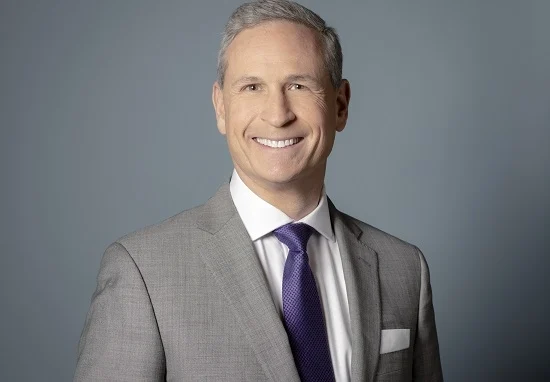
Colt Technology Services’ team lead for Asia capital markets outlined how Asia is redefining the blueprint for integrated digital and traditional markets.
The convergence of traditional finance (TradFi) and decentralised finance (DeFi) is accelerating as institutions seek greater efficiency, transparency, and global accessibility in trading and post‑trade processes. Russell Toop, team lead for Asia capital markets at Colt Technology Services discussed Asia’s crypto ecosystem in 2026 and how it reflects a convergence of robust regulation, cutting-edge connectivity and innovative trading solutions.
“While both ecosystems historically operated in parallel - with TradFi offering regulatory assurance and established market infrastructure, and DeFi providing programmability and frictionless settlement - the next phase of market evolution lies in interoperability,” said Toop.
One of the most significant trends shaping Asia’s crypto landscape is the evolution of regulatory frameworks. Singapore’s Monetary Authority and Hong Kong’s Securities and Futures Commission have introduced innovation-friendly regimes, issuing dozens of licences for digital asset exchanges and virtual trading platforms. This clarity is fuelling confidence among institutional investors and accelerating the adoption of DeFi solutions, Toop pointed out.
At the same time, Japan’s Financial Services Agency (FSA) is planning to reclassify major cryptocurrencies like bitcoin and ethereum as “financial products” under the Financial Instruments and Exchange Act (FIEA), aligning tax treatment with equities at a flat 20% capital gains rate—a gamechanger for traders.
Meanwhile, Singapore Exchange (SGX) and Nasdaq are collaborating on a Global Listing Board, set to launch mid-2026.
“This initiative simplifies dual listings between the US and Singapore, reducing friction and cost for companies seeking global capital access,” explained Toop.
Coupled with the introduction of bitcoin and ethereum perpetual futures on SGX, Toop noted that Asia is reinforcing its role as a trusted gateway for institutional crypto products.
Meanwhile, CME Group announced that its cryptocurrency futures and options will trade 24/7 on CME Globex on May 29. This move underscores the growing demand for continuous access to crypto markets, bridging time zones and enhancing global liquidity.
Beyond the crypto markets, the rise of alternative finance ecosystems and trading systems (ATS) is another defining trend in Asia, said Toop.
“Growth in the number of platforms participating in the APAC alternative finance market is influencing trading patterns and behaviours and creating ripples across the world,” he noted.
Millions of investors across Asia are actively trading more than 2,100 US securities using existing extended‑hour platforms.
“This is pushing US exchanges to always-on trading. In Q1 2025, over 55% of shares traded during US extended hours were executed in the pre‑market - between 4am and 9.30 am EST - driven by international demand, especially from Asia.” Bruce ATS is one of these alternative trading platforms, offering overnight access to US equities, bridging time zones and enabling 24/5 trading for institutional clients worldwide.
In 2025, Colt integrated Bruce ATS into its infrastructure portfolio, empowering broker-dealers and financial institutions to tap into extended liquidity windows with reliability and speed.
For Colt, this partnership was followed by a collaboration with South Korea’s first ATS, Nextrade, which launched in 2025 and quickly captured 30% of the country’s daily trading volume on individual stocks.
Colt serves as an important connection between the trading platforms and their international clients.
“With extended trading hours and lower fees, ATS platforms are reshaping liquidity access for institutional investors,” said Toop.
He explained that Colt’s partnership with ATS platforms positions the business as a critical connectivity provider in this evolving ecosystem.
One of the key reasons they look to Colt is to connect their systems with a secure, ultra-low latency network – a solution Colt is bringing to Japan Alternative Market’s Proprietary Trading System, enabling institutional investors to access one of Asia’s most dynamic alternative trading ecosystems.
“This connectivity ensures deterministic performance for cross-border trading and supports the growing demand for secure, high-speed access to Japanese liquidity pools,” said Toop.
To solve the latency and connectivity challenges between regions, Colt offers Dedicated Cloud Access (DCA) - a solution that provides dedicated, high-performance connectivity to many cloud environments.
“Traditionally, DCA is used for on-premises to cloud connectivity; however, it also supports cloud-to-cloud connections, enabling low-latency region-to-region communication for latency-sensitive applications like crypto trading,” said Toop.
He added: “As traditional finance and digital assets continue to merge, Asia offers unparalleled opportunities for investors, exchanges, and technology providers alike. For firms looking to stay ahead, embracing these trends is not optional; it is essential.”
Related topics
Related Articles
All Insights30th June, 2026
Wedbush joins DraftKings, Kraken in prediction markets push
The California-based broker has announced membership in DraftKings’ proprietary exchange and Bitnomial Clearinghouse to expand multi-asset clearing and execution capabilities across regulated prediction markets and digital asset derivatives.
Aravind Bulusu
30th June, 2026
Options Technology launches AtlasInsight V5 for advanced analytics
The fintech said the latest version of its flagship market data platform represents a boost to functionality and performance.
Aravind Bulusu

30th June, 2026
CME looks to product development to harness hedging demand
CME Group sees an enhanced product suite driving volume and open interest growth, as traders look to refine strategies in the face of volatile commodity markets.
Radi Khasawneh