Oil volatility hits one-year high as cross-asset hedging accelerates
3rd March, 2026

Implied volatility climbed sharply across commodities, equities and credit after US and Israeli strikes on Iran pushed crude prices higher and disrupted tanker traffic through the Strait of Hormuz.
Oil prices were up about 8% in early trading, according to analysis from Cboe Global Markets published on Monday, with one-month implied volatility jumping seven points to near a one-year high of 60%. Skew remained deeply inverted, with calls trading at a premium to puts as investors positioned for further rises.
"As we noted last week, what’s unusual about this latest geopolitically-driven spike in oil prices is the positioning in longer-dated options," the report, authored by Mandy Xu, head of derivatives market intelligence said. "While it’s not uncommon to see skew invert at the front-end of the curve, we’re seeing this extend to longer-dated options as well, with WTI oil 6M skew also inverting last week – that hasn’t happened since the 2022 Russia/Ukraine conflict."
The positioning suggests traders are hedging the risk of sustained supply disruption rather than a brief price spike.
George Griffiths, head of dealing at AMT Futures, summarised Monday's trading as orderly.
"The reopen began in predictable formation: crude meaningfully higher, precious metals firmer, and gas clearly registering the largest upside reaction," he said in published commentary at the end of trading. "The weekend’s noise did not translate into a disorderly open. Price discovery largely auctioned around positioning clean up on risk carried over from the prior week, with shorter time frame participants providing the necessary liquidity."
Uncertainty over the duration and direction of policy as well as the difficulty of shifting positions constrained activity, he added.
"Energy bore the clearest expression of that duration risk," Griffiths said. "Brent broke higher and held, suggesting transport risk is being embedded rather than merely spiked on sentiment. TTF moved more violently, repricing forward uncertainty around LNG flows out of the Gulf. The debate has shifted from whether Hormuz is formally closed to whether it is functionally constrained by insurance and shipping behaviour. Gas is less flexible than crude, and LNG is the fragile leg, more sensitive to logistical choke points."
The reaction was not confined to energy. The CBOE Volatility Index rose almost four points, outpacing the 1.1% decline in S&P 500 futures. Cboe attributed 1.8 points of the increase to higher fixed-strike SPX volatility and a further 0.7 points to steeper skew and convexity. One-month SPX skew is now approaching levels last seen during the August 2024 yen carry unwind.
Credit markets have also repriced. The VIXIG index, which tracks implied volatility in US investment-grade credit, climbed 10 points last week to its highest level since May amid renewed concerns over private credit.
"For most of the past year, credit volatility has traded as the cheapest cross-asset vol, but that has changed in recent weeks," the report said. "Rates and FX vol now screen as the cheapest."
Cboe also highlighted growing activity in options on its Magnificent-10 Index, launched in December to track a basket of large-cap technology names. Nearly 40,000 contracts traded on Friday, representing roughly $1.6bn (£1.2bn) in notional value. Most of the volume was concentrated in near-term 3 March expiry puts that were 5-7% out of the money, although overall flow was described as broadly balanced between buyers and sellers.
With the Strait of Hormuz emerging as the key flashpoint for energy and shipping markets, traders are bracing for turbulence, as outlined in ANALYSIS: US-Iran conflict to spur volatility in energy and freight prices. Derivatives desks are also adjusting positions across the curve, detailed in oil derivatives on alert as Hormuz tensions lift supply risk.
Related Articles
All Insights3rd June, 2026
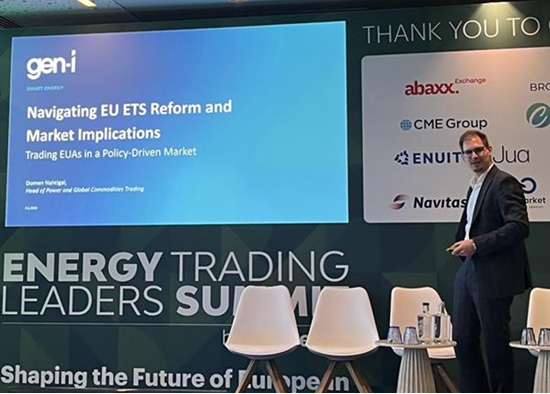
Carbon traders rethink risk management ahead of July EU ETS review
Upcoming reforms to the European Union Emissions Trading System (EU ETS) could reshape carbon market dynamics and force traders to focus more heavily on policy scenarios, according to a senior carbon trader.
Zak Jakubowski
3rd June, 2026
SEBI’s ‘dividend cap’ on clearing houses traps excess capital without benefit - expert
A plan to cap the dividend earned by stock exchanges from their clearing subsidiaries is reportedly under consideration by a panel constituted by the Securities and Exchange Board of India (SEBI), according to a report by Economic Times.
Aravind Bulusu

3rd June, 2026
Marex opens Japan office in APAC push
The London-based brokerage and clearing firm has launched operations in Japan, marking a significant expansion of its Asia Pacific strategy and strengthening its presence in one of the region’s most established capital markets.
Narayani Srinivasan