Euronext flags urgent need to scale European capital markets
18th March, 2026
Calls for deeper markets come as defence financing demands rise and tokenisation gains traction across the region amid heightened geopolitical tensions linked to the US-Iran conflict.
Speakers at Euronext's annual conference stressed the need to mobilise private and institutional capital at scale, according to commentary published on Tuesday following the event. Discussions also pointed to tokenisation as an emerging tool to modernise market infrastructure and improve capital allocation across Europe.
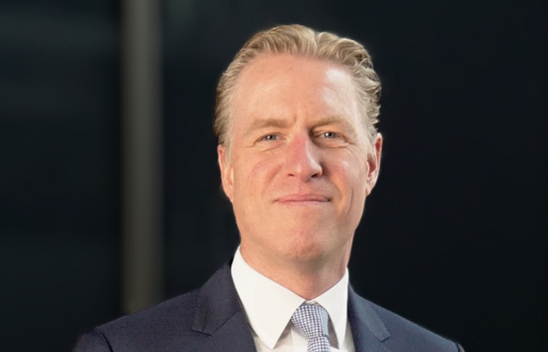
“This 14th edition of the Euronext Annual Conference has once again provided an opportunity to bring together European policymakers, regulators, global investors and business leaders to assess the key priorities for European capital markets in today’s challenging geopolitical and economic environment,” said Stéphane Boujnah, chief executive and chairman of Euronext.
“Today, more than ever, Euronext is committed to the ambition of the European Savings and Investments Union and supports all initiatives contributing to the continent’s strategic autonomy. In a geopolitical context where uncertainty has become the norm, the central theme of this edition, ‘Strengthening European capital markets now’, stands out as an absolute priority.”
Defence funding and energy volatility drive capital markets activity
Participants highlighted the growing role of capital markets in financing defence capabilities, addressing sovereign debt pressures and competing more effectively with global markets, particularly the US.
Recent market activity on Euronext has reflected this dynamic, with Capital Tankers Corp. raising NOK 4.8bn (£373m) in a private placement ahead of its listing on Euronext Growth Oslo this week, marking the largest western shipping IPO in more than two decades.
The offering was significantly oversubscribed and attracted more than 900 investors, highlighting strong demand for energy-linked assets amid heightened volatility in global commodity markets, with crude oil futures trading above $100 (£75) per barrel earlier this week as tensions between the US and Iran escalated. Brent crude rose above $106 while WTI traded above $102, underlining the sensitivity of oil markets to geopolitical risks and potential supply disruptions.
Senior officials including Norges Bank Investment Management chief executive Nicolai Tangen, Dutch finance minister Eelco Heinen and Eurogroup president Kyriakos Pierrakakis emphasised the importance of strengthening capital markets quickly to safeguard Europe’s independence and capacity to act.
CAC 40 ownership remains concentrated as retail participation rises
Alongside the policy focus, Euronext published data showing continued concentration of ownership in France’s CAC 40 index. The top 10 shareholders accounted for 30.1% of total ownership in 2024, with founding families alone representing 17.6%.
Asset managers remained the largest investor group, holding 25% of the index, equivalent to around €594bn (£513bn), with more than 10,000 funds invested across CAC 40 companies. Passive investment strategies continued to expand, reflecting broader shifts in global markets.
Retail participation also increased, with individual investors accounting for 6.8% of the index, up from 5.4% in 2023. However, around one-third of ownership remains unidentified, highlighting the fragmented nature of European equity markets.
Earlier discussions at the conference also pointed to tokenisation as a key area of development for European market infrastructure, as policymakers and market participants explore ways to improve efficiency and integration.
Tokenisation and defence funding gain traction in European markets
This comes as the Eurosystem has launched its Appia initiative to examine how distributed ledger-based wholesale markets should be structured, including the role of central bank money, interoperability standards and governance, with a longer-term aim of establishing a blueprint for a tokenised financial ecosystem across Europe.
The conference also recognised major capital markets transactions in 2025, including equity raises and bond issuances. Bpifrance’s €1bn European defence bond attracted strong demand, underlining investor appetite for defence-related financing.
Market participants said deeper and more integrated capital markets will be essential to support funding needs, while developments such as tokenisation could help improve efficiency and access across the European financial system.
“In the face of this new world, Europe must demonstrate responsiveness and ambition to deliver speed and scale. Safeguarding our economic security and sovereignty can no longer be taken for granted: strengthening European capital markets is now a collective responsibility and an essential condition for the freedom of Europe,” added Boujnah.
Earlier this month, Euronext reported a 0.3% increase in futures and options trading to 14.8 million lots in February, as compared to 14.7 million contracts the same time last year.
Bloomberg also recently agreed to incorporate Euronext’s spot foreign exchange (FX) and precious metals transactions into its offerings, as part of a broader strategy to expand the liquidity sources supporting its key benchmarks.
Related topics
Related Articles
All Insights16th June, 2026
Abaxx expands market data distribution through LSEG
The Singapore-based exchange has integrated its pricing data with the London Stock Exchange Group (LSEG) analytics platform to allow institutional clients access to Abaxx market data alongside other global commodities benchmarks.
Aravind Bulusu

16th June, 2026
Responsible AI Institute launches autonomous agent sandbox
The Texas-based AI nonprofit has launched ‘TrustX for Finance’, a sector-specific initiative that defines how autonomous artificial intelligence (AI) systems are evaluated, controlled, and approved for production in financial services.
Aravind Bulusu

15th June, 2026
Eurex expands European derivatives trading via Payward-owned NinjaTrader
The Deutsche Boerse Group-owned venue said NinjaTrader’s European clients can now trade Eurex's most actively traded derivatives, including EURO STOXX 50, DAX equity index futures and Euro-BUND fixed income futures.
Aravind Bulusu