ANALYSIS: US-Iran conflict to spur volatility in energy and freight prices
2nd March, 2026
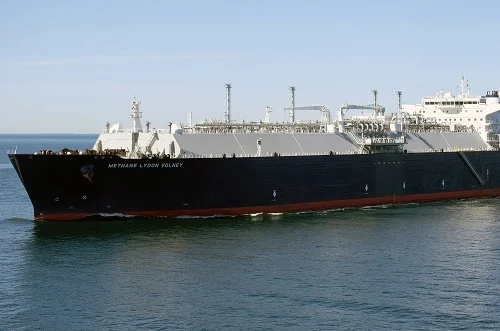
Market participants said that the Strait of Hormuz will be crucial to watch as uncertainty prevails in the Middle East.
Following US and Israeli airstrikes on Iran that began on Saturday, the country has responded with missile strikes on Israel and a number of Gulf nations. As the US-Iran conflict continues to unfold, market participants are expecting volatility in energy and freight prices, particularly for crude oil.
"The market is expected to be volatile in the next few days as the situation has escalated quickly," said Russell Robertson, chief business development officer at Abaxx Exchange.
He added: "For energy markets the focus will be on the Strait of Hormuz and any perceived disruption to movement. However, we expect volatility across energy and freight markets with potential safe haven buying."
The Strait of Hormuz plays a significant role in global energy logistics. Approximately 20 million barrels of crude, condensate and fuel products passed through the strait each day in 2024. This is equivalent to 20% of the world's liquid oil consumption. One-fifth of global liquefied natural gas also transited through the strait in 2024, primarily from Qatar.
Speaking about the crude oil market, Toby Copson, portfolio manager at Davenport Energy, said that tail risk has been fundamentally repriced overnight and the options market was structurally underhedged going into the current situation. He expects volatility for energy markets across the board.
"The critical variable is duration of disruption to Hormuz flows, which will determine whether near-dated implied volatility holds or mean reverts once the initial shock premium is absorbed," he said.
Iran has issued warnings via radio to ships passing the Strait of Hormuz that no vessels should pass through. Trading ships and tankers have suspended shipments. So far, three tankers have been hit.
Disruptions are expected to have a chain effect on oil supply, freight and energy prices globally.
On Friday, the Brent crude price for April delivery was at $72.48 (£53.88) a barrel on the London ICE Futures Exchange while the West Texas Intermediate (WTI) for April delivery settled at $67.02 a barrel on the New York Mercantile Exchange. When markets opened on Monday, Brent crude prices spiked up to $82.37 a barrel while WTI futures went past $72 a barrel.
In reaction to the conflict, OPEC+ will boost production by 206,000 barrels a day from April.
Kathleen Brooks, research director at XTB, wrote in a note that this move plus the fact that Iran's foreign minister has confirmed that Iran has no plans to close the Strait of Hormuz, should see any upside in oil price to cap initially at around $80 a barrel but unlikely to trigger a $100 a barrel.
She added that precious metals, particularly gold, will also see a boost in prices, especially if the conflict triggers inflation from a surge in the oil price. Gold reached a one-month high on Monday, going up to $5370 per ounce.
Related topics
Related Articles
All Insights29th May, 2026
Kalshi launches plan to list first ‘true’ US regulated perps
Commodity Futures Trading Commission (CFTC) regulated prediction venue Kalshi has announced plans to ‘soon’ list the first true perpetual futures in the jurisdiction.
Radi Khasawneh

29th May, 2026
Index derivatives now account for '20% to 30%' of some benchmark businesses - Burton-Taylor
Volatility and institutional hedging activity are becoming increasingly important drivers of growth for index providers, as derivatives trading and structured products account for a larger share of benchmark revenues, according to a research director.
Zak Jakubowski

29th May, 2026
Cboe gets green light to extend trading hours for select multi-listed equity options
Approximately 20 names, including all the Magnificent 7 stocks, are expected to be available for trading at launch on July 13.
Karry Lai