ANALYSIS: 24/7 trading and event contracts offer growth potential for Asia's derivatives markets
12th May, 2026

Interactive Brokers' APAC regional head reflected on the trends towards zero-day options and weekend trading as well as the feasibility of prediction markets in Asia.
David Freidland, managing director for Asia Pacific at Interactive Brokers, observed that a younger generation with wider access to knowledge and markets is driving volumes for the brokerage's options business both globally and APAC.
"The trend towards 24/7 trading has opened up a brand new world, particularly with zero-day options and weekend trading," he said.
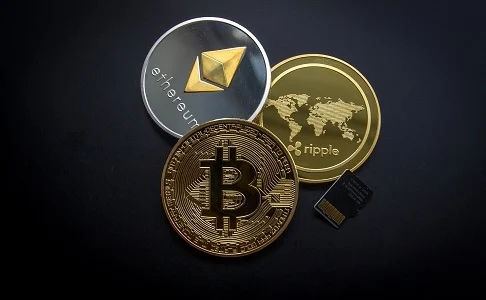
Interactive Brokers expanded its crypto futures offering in February with bitcoin and nano and perpetual ethereum futures from Coinbase for professional traders.
Meeting the demand of 24/7 trading also means finding staff to manage risk for trading outside of normal hours and overnight markets such as the US.
For Hong Kong, Friedland said that trading US markets remains attractive due to a lack of cross-margining services that cut across local market instruments, leading to a relatively inefficient capital treatment for regional derivatives traders.. An area that could see potential growth in the future is crypto, he added.
"With a crypto environment that is heavily biased towards professional investors, Hong Kong's Securities and Futures Commission hopefully will open up the space for retail investors more as they often end up opening accounts with unregulated entities," said Friedland.
"Once they have accounts open elsewhere, it becomes increasingly difficult to convince them to move to regulated entities if and when regulations change."
On the other side of the Pacific, the US is advancing towards opening up events contracts and Friedland believes it'll be a sandbox for the rest of the world.
In March, the Commodity Futures Trading Commission opened a public consultation on prediction markets and issued new staff guidance to exchanges listing event contracts as activity in the sector accelerates.
Interactive Brokers offers predictions market trading via its Forecast Trader platform.
For Asia, Friedland believes that prediction markets are an area jurisdictions such as Singapore and Hong Kong could look to foster, but there are varying degrees of acceptance.
"While sports event contracts may be an area that regulators hesitate to move into as there are already operators such as the Hong Kong Jockey Club in the space, the use of prediction markets for weather and economic figures such as GDP are areas with good potential," said Friedland.
In other parts of Asia, Interactive Brokers has expanded in Taiwan, particularly with its strong semiconductor sector. In Malaysia, the demand for palm oil from hedge funds that are looking to diversify beyond the US market has driven demand for local currency exposure.
Competition remains fierce in the brokerage space as firms compete on fees and crypto players are emerging quickly. Friedland believes that more mergers could take place as troubled brokers look to consolidate in an increasingly competitive environment.
Technology remains a differentiator, particularly as larger brokers with a global footprint continue to scale.
"The 24/7 trading trend will push exchanges to rethink their technology and infrastructure," he said.
In Asia, Hong Kong is grappling with dated technology that drives up costs.
"Without a fundamental shift in changing systems, it'll be increasingly difficult for exchanges to move quicker to compete with the US market," said Friedland.
Related topics
Related Articles
All Insights26th June, 2026
MAS launches new institute to scale AI and tokenisation adoption
The new institute is designed to help the financial sector transition from isolated technology experimentation to broad-based, commercial deployment.
Narayani Srinivasan
26th June, 2026
BCP Technologies, Archax join forces to expand RWA transactions via tGBP
Institutional clients can now use a tokenised Great British Pound (tGBP) issued by the UK-based crypto asset firm BCP Technologies to access full range of tokenised real-world assets (RWA) on Archax.
Aravind Bulusu

26th June, 2026
Ripple launches stablecoin in Japan after regulatory approval
Japan’s regulator has categorised the San Francisco-based firm’s US dollar-backed token as a new category of payment instrument.
Narayani Srinivasan