ANALYSIS: India represents huge opportunity for international exchanges
24th September, 2024

Speaking at the FOW Trading India 2024 conference on Thursday, derivatives trading experts from international firms said the vast Indian domestic market is generating interest
The Indian derivatives market has huge potential for non-Indian firms who see the GIFT City initiative as an important component in the gradual opening up of the Indian market to international firms, a panel has said.
Speaking at the FOW Trading India 2024 conference on Thursday, derivatives trading experts from international firms said the vast Indian domestic market is generating interest.
Russell Beattie, managing director and head of Asia Pacific for CME Group, said the US group is exploring its options with regards to attracting more Indian flow to its various US-based exchanges.
“India is still predominantly a domestic-traded and focused market. The outbound activity is still somewhat limited at this particular point. The good thing is that regionally and globally, India has everyone’s attention."
Beattie added: “There is a lot of demand to make sure that we clearly and concisely get a viewpoint around how we can support the Indian growth strategy.”
Mezhgan Qabool, head of Business Development and Sales, Asia Pacific and Middle East at Eurex, agreed, adding: “We are European and we are very strong in Europe with the products we have but we need to be more global and more global for us means Asia. In the US there are certain restrictions on the products and services we can offer but in Asia there is a bit more flexibility.”
Global exchanges like CME and Eurex open earlier than their domestic trading day to attract volume from Asian markets such as India, and Asia traders now contribute a serious amount of liquidity and volume to these markets.
Beattie told the delegation: “We are seeing very significant liquidity in the Asian timezone. Twenty years ago when I started, you would have to wait for London to open to transfer some risk or wait for the US to open to transfer some risk.
“What we’re seeing right now is very deep liquidity pools across a number of our global exchanges in the Asia timezone. What’s really good is we are starting to see a significant amount of Asia domiciled traders trading the Asian timezone.”
The panellists also discussed the role that GIFT City might play in encouraging more Indian firms to trade outside of India.
Beattie, who was in Mumbai immediately after having visited the business hub, said: “I’m really encouraged that GIFT City is starting to develop, we’ve still got a bit of a way to go. One of the challenges I have in my role is looking at how we should invest from a technology perspective.”
David Helps, head of International Business Development at the Montreal Exchange, part of the TMX Group, who had also recently been to GIFT, added: “We are all keeping our eye closely on GIFT. I was really encouraged when I was there this week - there were more buildings which is always a good sign and there was a lot more activity. There is a long way to go but I’m very encouraged for obvious reasons.”
Nina Nagpal, independent director on board at Bank of Baroda, offered a nuanced view, telling the delegation: “Indian regulation and Indian regulators have been extremely calibrated in their approach. They want you to not get into short-selling, rather they want you to hedge and use derivatives for hedging so there is a calibrated and cautious approach. And, from where we have come, I think that is a logical and progressive path to follow.”
“India is a nascent market in that ecosystem. We are a plain vanilla equity derivative, we don’t have structured products, we don’t have a robust debt market as such compared with the size of our equity markets. So I think a lot of things need to evolve in that ecosystem if we aspire to that $15-$20tn (£11.2tn-£15tn) market cap.”
Related Articles
All Insights3rd June, 2026
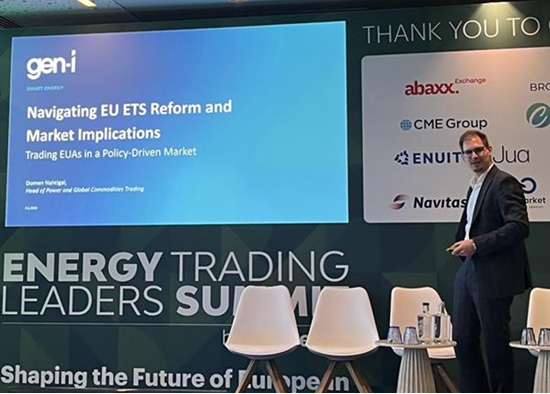
Carbon traders rethink risk management ahead of July EU ETS review
Upcoming reforms to the European Union Emissions Trading System (EU ETS) could reshape carbon market dynamics and force traders to focus more heavily on policy scenarios, according to a senior carbon trader.
Zak Jakubowski
3rd June, 2026
SEBI’s ‘dividend cap’ on clearing houses traps excess capital without benefit - expert
A plan to cap the dividend earned by stock exchanges from their clearing subsidiaries is reportedly under consideration by a panel constituted by the Securities and Exchange Board of India (SEBI), according to a report by Economic Times.
Aravind Bulusu

3rd June, 2026
Marex opens Japan office in APAC push
The London-based brokerage and clearing firm has launched operations in Japan, marking a significant expansion of its Asia Pacific strategy and strengthening its presence in one of the region’s most established capital markets.
Narayani Srinivasan