Broadridge sees securities finance tech as key to front-to-back proposition
24th February, 2023

Ofir Gefen, head of sales and revenue for EMEA and APAC at Broadridge Trading and Connectivity Solutions, said its Securities Finance & Collateral Management solutions (SFCM) are key to the firm’s holistic proposition
Broadridge sees its securities finance and collateral management technology as a core component of its front-to-back proposition as the US tech giant looks to explore new opportunities presented by its 2021 acquisition of Itiviti.
Ofir Gefen, head of sales and revenue for EMEA and APAC at Broadridge Trading and Connectivity Solutions, said its Securities Finance & Collateral Management solutions (SFCM) are key to the firm’s holistic proposition
He told Global Investor: “As Broadridge Trading and Connectivity Solutions, we now have the full front-to-back so that is trading, market-making, position management, compliance as well as middle office confirmation-allocation process all the way to settlement and clearing."
Gefen added: “A lot of sell-side sales also require reporting so now we have Message Automation and we have securities lending software in Securities Finance & Collateral Management solutions (SFCM) which is great because a lot of clients will say “we like the OMS but can you help us with securities lending?” Now we can do that.”
Gefen said: “If we go back to the reasons why Broadridge bought Itiviti, it is around Broadridge getting that front office footprint but it’s also about geography. Broadridge is well known in North America, it has a good footprint in the UK and Japan but a relatively small presence in the rest of EMEA and Asia which is where Itiviti was strong."
Gefen added: “As Itiviti, we were always missing a brand in the US and Broadridge has given us that, opening doors for our order management system (OMS) and market-making products on the sell-side.”
Asked about the prospect of tighter scrutiny of technology vendors after the ION cyber attack last month, Gefen said: “I expect, looking ahead, there will be increased scrutiny of what sorts of back-ups regulated entities have for their IT solutions and that is one area that I think will develop. The other is what sort of cyber-security measures do the vendor systems have?”
He said technology firms that supply heavily regulated entities like investment banks have been subject to de facto regulation though they have not been directly regulated themselves.
Gefen cited the Hong Kong regulator’s regulation of algorithmic trading in 2012: “That regulation fell on the regulated entity but not on the vendors but, in reality, a lot of these pieces of kit such as OMSs and execution management systems (EMS) fell under this regulation so what happened was the broker turned around to the vendor and said “here is some regulation that we have to comply with, so can you show us that you are complying with it?”
He added: “So, while the burden was on the regulated entity, a lot of the vendors were aligned with what the regulators required from the vendors’ clients. So, yes, we have been a step removed from that, but it has been getting closer and closer.”
Related Articles
All Insights3rd June, 2026
Carbon traders rethink risk management ahead of July EU ETS review
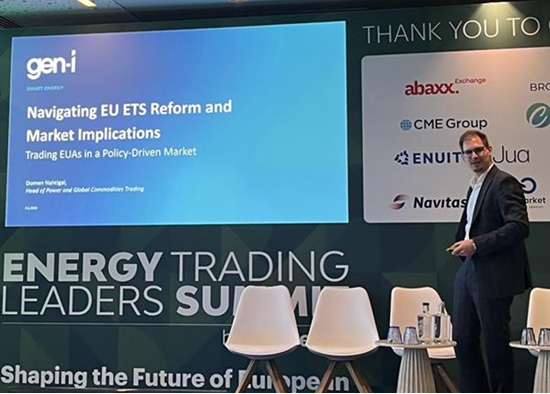
Upcoming reforms to the European Union Emissions Trading System (EU ETS) could reshape carbon market dynamics and force traders to focus more heavily on policy scenarios, according to a senior carbon trader.
Zak Jakubowski
3rd June, 2026
SEBI’s ‘dividend cap’ on clearing houses traps excess capital without benefit - expert
A plan to cap the dividend earned by stock exchanges from their clearing subsidiaries is reportedly under consideration by a panel constituted by the Securities and Exchange Board of India (SEBI), according to a report by Economic Times.
Aravind Bulusu

3rd June, 2026
Marex opens Japan office in APAC push
The London-based brokerage and clearing firm has launched operations in Japan, marking a significant expansion of its Asia Pacific strategy and strengthening its presence in one of the region’s most established capital markets.
Narayani Srinivasan