Developments in initial margin monitoring
13th October, 2021

Mark Demo, Director of Community Development and John Pucciarelli, Head of Industry and Regulatory Strategy, Acadia consider developments in initial margin monitoring. This article is part of the Collateral in 2022 Guide
Developments in initial margin monitoring
Mark Demo, Director of Community Development and John Pucciarelli, Head of Industry and Regulatory Strategy, Acadia consider developments in initial margin monitoring.
How have the UMR regulations changed for Phase 5 &6 firms to allow them to monitor IM before they became operationally ready?
If firms are in a monitoring state they are not expecting to exchange regulatory initial margin on day one and therefore have more control over the costs associated with coming into compliance, meaning they can set up their monitoring process comparing exposure versus their threshold using information provided by their dealer counterparty.
Using Acadia’s Threshold Monitor service, firms can set triggers, for example when their exposure gets to 50% of their threshold. They can agree to begin negotiating their custody agreement, or if they don’t want their exposure to grow beyond a certain point in a specific portfolio versus a specific counterparty they can adjust their trading behaviour so that they will never come into compliance in this relationship.
Before regulatory relief, firms had to paper, custody and calculate everything. Now they can be much more surgical in how they approach the compliance requirement.
How are firms realigning their portfolios to stay under the threshold?
Most firms have taken advantage of the extra time and done a lot of testing to make sure they know what will happen on their first compliance day. The big disappointment is the failure of the European regulators to come up with a revised model in time for phase 5 firms to avail themselves of the same type of model validation requirement that exists for prudentially regulated firms in other jurisdictions.
If you cannot meet the regulatory deadline, it is likely you will need to stop trading. Everyone is busy at this point and if you pick up a compliance requirement late you are going to be at the back of the queue.
How are firms in phase 5 preparing for monitoring their exposure versus their dealers?
Most of the firms that want to take advantage of the regulatory relief and not do the calculations themselves have signed up for our threshold monitoring service because there is no cost and they can access a basic version of the full service to view IM exposure as calculated by their dealer counterparties.
Because every phase 1 through phase 4 firm sends its exposure to us every day, it removes the need to call the individual brokers to ask what the IM exposure amount is today. Firms can take advantage of the fact that all the brokers are already here in one place, sending their data to one central location where they can log in to view the exposure that is calculated against the value of the third parties as an estimate.
Threshold monitoring relationships now outpace regulatory IM CSAs by a factor of three to one. We have setup thousands of regulatory monitoring relationships for hundreds of firms. This situation is unique to Acadia - there is no one else in the world that provides a centralised source of regulatory IM exposure.
This article is part of the Collateral in 2022 Guide, and if you want to find more click here to download the guide.
Related Articles
All Insights3rd June, 2026
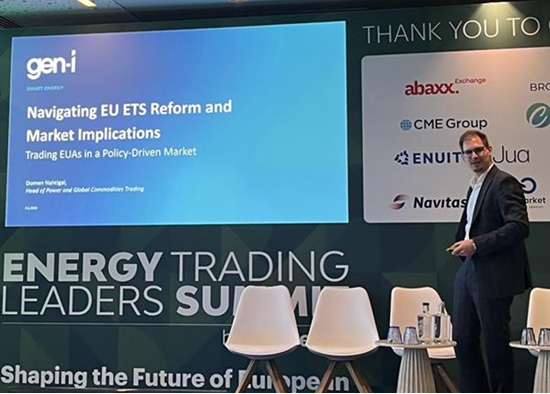
Carbon traders rethink risk management ahead of July EU ETS review
Upcoming reforms to the European Union Emissions Trading System (EU ETS) could reshape carbon market dynamics and force traders to focus more heavily on policy scenarios, according to a senior carbon trader.
Zak Jakubowski
3rd June, 2026
SEBI’s ‘dividend cap’ on clearing houses traps excess capital without benefit - expert
A plan to cap the dividend earned by stock exchanges from their clearing subsidiaries is reportedly under consideration by a panel constituted by the Securities and Exchange Board of India (SEBI), according to a report by Economic Times.
Aravind Bulusu

3rd June, 2026
Marex opens Japan office in APAC push
The London-based brokerage and clearing firm has launched operations in Japan, marking a significant expansion of its Asia Pacific strategy and strengthening its presence in one of the region’s most established capital markets.
Narayani Srinivasan