The hidden costs of Evergrande affair
7th October, 2021

By Daniel Carpenter, Commercial Lead at Meritsoft (a Cognizant company)
By Daniel Carpenter, Commercial Lead at Meritsoft (a Cognizant company)
Thinking that the financial pain of China’s second largest property firm tittering on the brink has already been felt by the wider financial system, then think again.
At a macro level, investors may start to lose faith in dollar denominated emerging market bonds, which could see sovereign debt inflows return to safer parts of the world. But what about the knock-on effect of Evergrande’s status across the global investment banks? The market mayhem has driven an increase in overall trading volume over the past few days which is the wider market affirming that there is a real concern. After all, the more prices go down, the bigger the indicator is that markets are pricing knowing that central bank of China is not going to step in.
The logical knock-on effect is as volumes rise, investment banks inevitably pay more in trade expenses. In a global survey of over 400 employees from the tier one and tier two investment banks and inter-dealer brokers, 80% of respondents said they were paying between $250m (£184m) and $1bn in trade expenses last year – with costs ranging from exchange and clearing expenses to brokerage and custodian bank fees.
This is a financial headache any trading desk head could really do without. Dealing with multiple brokers is challenging enough in calmer market conditions, but when prices are sinking and the number of trades are increasing, it is even harder for a bank to get a true handle on how much they will be charged.
While information needed to calculate the basic fees is typically available, the information required to determine better rates or to justify passing along costs may not accompany it. After all, fees vary significantly depending on how a trade is executed and settled. The trouble is that the fees and billing process is typically carried out reactively at the end of the month, as opposed to a daily.
This may be fine if every bill comes in on a monthly basis, but some of these Evergrande’s linked trades could be on a three-month cycle. Consequently, a lot of key information stands to be misplaced. For many banks trading the global debt markets right now, not just the regional ones directly exposed to the mortgage meltdown in China, there is far more to Evergrande than meets the eye.
Related Articles
All Insights3rd June, 2026
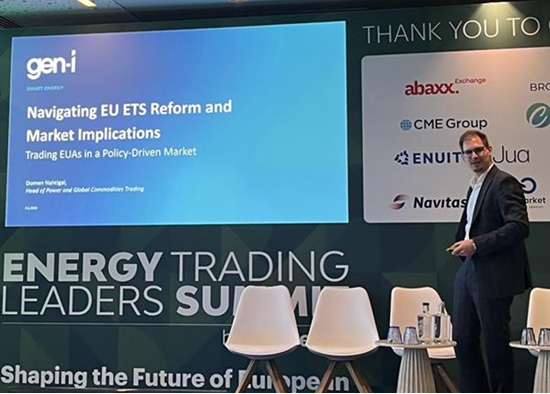
Carbon traders rethink risk management ahead of July EU ETS review
Upcoming reforms to the European Union Emissions Trading System (EU ETS) could reshape carbon market dynamics and force traders to focus more heavily on policy scenarios, according to a senior carbon trader.
Zak Jakubowski
3rd June, 2026
SEBI’s ‘dividend cap’ on clearing houses traps excess capital without benefit - expert
A plan to cap the dividend earned by stock exchanges from their clearing subsidiaries is reportedly under consideration by a panel constituted by the Securities and Exchange Board of India (SEBI), according to a report by Economic Times.
Aravind Bulusu

3rd June, 2026
Marex opens Japan office in APAC push
The London-based brokerage and clearing firm has launched operations in Japan, marking a significant expansion of its Asia Pacific strategy and strengthening its presence in one of the region’s most established capital markets.
Narayani Srinivasan