Next year's UMR phase likely to have 'more impact' - CME
24th August, 2021

The fifth phase of the margin rules will take effect on September 1 2021, affecting firms holding more than €50 billion ($42.8bn) of uncleared swaps
The September 2022 phase of the uncleared margin rules (UMR) will likely have a greater effect on foreign exchange trading than next week’s roll-out, the head of FX at CME has suggested.
The fifth phase of the margin rules will take effect on September 1 2021 with firms holding more than €50 billion ($42.8bn) of uncleared swaps required to start posting margin whereas next September’s sixth phase will see the threshold fall again to €8bn, which will cover many more firms.
Paul Houston, Global Head of FX Products at CME Group, said: “For September 1 this year, the number of entities impacted will be in the 100’s and from 2022 the estimated figure is greater than 1000.”
Houston said the introduction of these rules will affect behaviours as asset managers in scope for the fifth or sixth phases change their trading habits to reduce their exposure to uncleared swaps.
He added: “After 2022, when there are more customers impacted with the threshold for notional going down to $8 billion, I would expect more of an impact in the marketplace, and, because of the sheer volume of customers, this will be indirect as well as to the customers immediately impacted.”
Houston said there is likely to be a delayed reaction to the margin rules but he has already seen increasing demand for FX futures which could be explained by fund managers shifting their over-the-counter exposures into the listed market.
“While FX Forwards are not in-scope products for UMR, they do contribute to the notional driving the qualification. As such some asset managers are using FX futures where they are an adequate proxy because they don’t count towards the UMR qualification.”
He continued: “We recently hit record notional positions of $143 billion for asset managers using FX futures and that is definitely a trend that we are seeing – asset managers expressing more positions in futures; which could be linked to the UMR.”
Houston cited Greenwich Associates research that found firms using FX options would be required to put-up 69% less margin than rivals using prime brokers or 89% less margin than those trading bilaterally.
He concluded: “We feel there could also be a more lagged effect in the market and that could affect banks providing liquidity and credit intermediation or prime brokerage services. That additional cost remains unknown at this stage but costs will increase for impacted products.”
Related Articles
All Insights3rd June, 2026
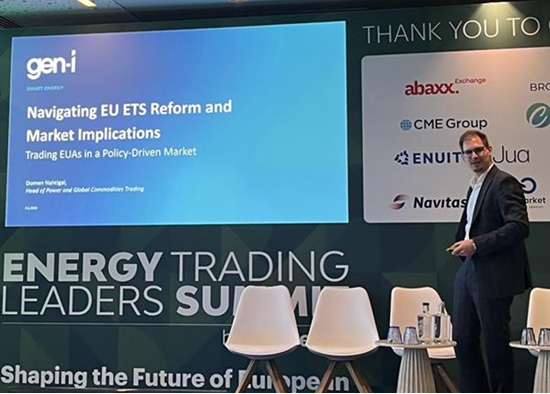
Carbon traders rethink risk management ahead of July EU ETS review
Upcoming reforms to the European Union Emissions Trading System (EU ETS) could reshape carbon market dynamics and force traders to focus more heavily on policy scenarios, according to a senior carbon trader.
Zak Jakubowski
3rd June, 2026
SEBI’s ‘dividend cap’ on clearing houses traps excess capital without benefit - expert
A plan to cap the dividend earned by stock exchanges from their clearing subsidiaries is reportedly under consideration by a panel constituted by the Securities and Exchange Board of India (SEBI), according to a report by Economic Times.
Aravind Bulusu

3rd June, 2026
Marex opens Japan office in APAC push
The London-based brokerage and clearing firm has launched operations in Japan, marking a significant expansion of its Asia Pacific strategy and strengthening its presence in one of the region’s most established capital markets.
Narayani Srinivasan