Avoid a final UMR hurdle
26th March, 2021

By Joakim Stromberg, head of triResolve Solutions at TriOptima
By Joakim Stromberg, head of triResolve Solutions at TriOptima
Pandemic-induced delays to the Uncleared Margin Rules (UMR) certainly provide market participants with some much-needed breathing space to reassess their initial margin (IM) strategies. But with phase five now just over six months out, some longstanding operational issues that have plagued the industry for too long need to come into sharp focus.
The reality is that are a lot of firms set to be pulled into the next phase that still need to ensure they have the right infrastructure in place in order to exchange IM when the time is right. This involves carrying out IM calculations, proactively monitoring their exposure and, crucially, integrating with tri-party agents. The trouble is that, until now, communicating IM with tri-party agents has involved the highly laborious task of logging onto a separate portal. A manual process of this nature involves typing in numbers which can lead to an entire myriad of mistakes. Worst case scenario is that a firm instructs the wrong amount of collateral to be settled. Even in the best-case scenario of someone being able to fix an incorrect number entry, there is still a huge amount of time wasted.
One way to overcome this issue is for firms to have seamless integration with all their tri-party agents. This is really the only way firms can reduce the risk of trades failing to settle because they do not have to go through the manual steps of keying in the amount of collateral that needs to be transferred. A Japanese bank which has been exchanging IM since back in 2016, recently saved up to 85% of the time that it previously took to communicate with all their tri-party agents. Time savings of this magnitude can really make all the difference as firms are much less likely to experience a high volume of settlement failures.
When it comes to settlement, every second really does count. Ahead of UMR phase five coming into force in September, now has to be the time to gain greater control over communication flows by integrating with tri-party agents. There are settlement automation services that have proven to be an effective way of both reducing the time it takes to send out the settlement instructions and reducing the risk of providing incorrect instructions which inevitably would generate a settlement failure. No firm wants to be testing or running endless IT implementations at this point in the UMR preparation cycle. With this in mind, surely having the margin and settlement processes interlinked with triparty agents is the best way to deliver faster turnaround times, reduced risk for settlement failures, as well as improved operational efficiency and transparency.
Related Articles
All Insights3rd June, 2026
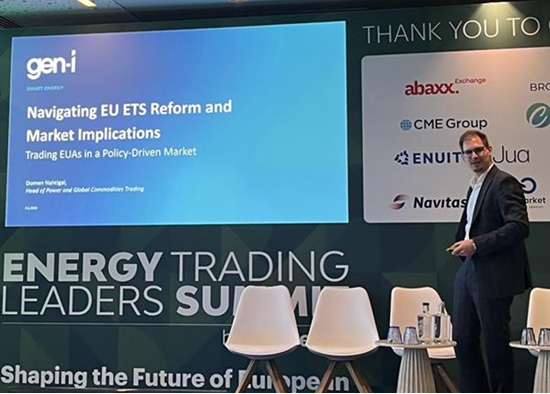
Carbon traders rethink risk management ahead of July EU ETS review
Upcoming reforms to the European Union Emissions Trading System (EU ETS) could reshape carbon market dynamics and force traders to focus more heavily on policy scenarios, according to a senior carbon trader.
Zak Jakubowski
3rd June, 2026
SEBI’s ‘dividend cap’ on clearing houses traps excess capital without benefit - expert
A plan to cap the dividend earned by stock exchanges from their clearing subsidiaries is reportedly under consideration by a panel constituted by the Securities and Exchange Board of India (SEBI), according to a report by Economic Times.
Aravind Bulusu

3rd June, 2026
Marex opens Japan office in APAC push
The London-based brokerage and clearing firm has launched operations in Japan, marking a significant expansion of its Asia Pacific strategy and strengthening its presence in one of the region’s most established capital markets.
Narayani Srinivasan