Fund managers' securities finance reporting 'fragmented' – Kaizen
25th March, 2021

London-based reporting specialist Kaizen feels the implementation of SFTR went well but there are improvements to be made
European fund managers still have a long way to go to streamline their reporting of securities financing transactions as current processes are “fragmented” across various counterparties and reporting venues, a reporting expert has warned.
Jonathan Lee, a senior regulatory reporting expert at Kaizen Reporting, said on Wednesday the October 2020 implementation of the EU’s Securities Financing Transactions Regulation among fund managers had gone smoothly but there are still issues to be ironed out.
Speaking at Global Investor’s European Repo and Regulatory Forum on Wednesday, Lee said of the SFTR roll-out to the buy-side: “While, at face value, it appeared to go quite well, there are a few caveats to that. While the acceptance rates from the trade repositories remained unchanged, we saw comparatively low levels of pairing and matching of transactions, the quality of those reports is considerably less clear.”
Panellists speaking earlier in the conference had suggested that SFTR’s phased implementation last year had benefited from lessons drawn from Europe’s roll-out of the European Market Infrastructure Regulation (EMIR), which began in 2014.
But Lee feels the current European reporting regime is beset by fragmentation due to the involvement of multiple brokers and trade repositories.
“We need to take into consideration that there are now multiple reporting counterparties, so all of the funds are required to report, and, in turn, there was much higher adoption of delegated reporting, which means there can be multiple reports-submitting parties.”
Lee added: “So that can be broker-dealers reporting on your behalf, coupled with the fact that they all have different standards in terms of how they implement that reporting and, in some cases, they use different trade repositories as well.”
He concluded: “Reporting is considerably more difficult where the reporting process itself is that much more fragmented.”
Some fund managers have responded to the imposition of reporting by delegating all of their reporting duties to brokers or banks but Lee said that presents additional challenges around control.
He added: “While you can delegate the act of reporting, you cannot delegate the legal obligation to ensure that reporting is complete, accurate and timely. Ensuring that you have the necessary controls around that delegation is absolutely key but, where you have multiple report-submitting parties and potentially the use of different reporting platforms and trade repositories, it becomes that much more difficult.”
Kaizen Reporting chief executive Dario Crispini said in January European and UK firms must be prepared for a period of “bedding-in” as they adjust to Brexit changes.
Related Articles
All Insights3rd June, 2026
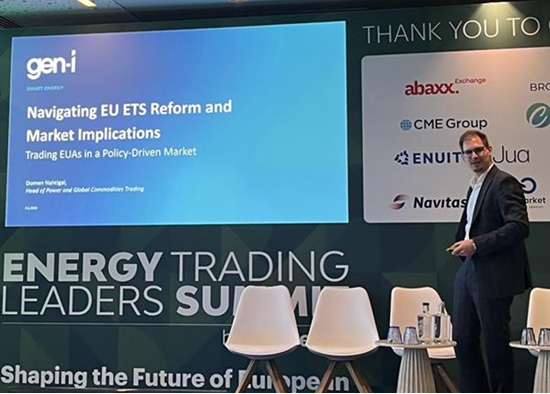
Carbon traders rethink risk management ahead of July EU ETS review
Upcoming reforms to the European Union Emissions Trading System (EU ETS) could reshape carbon market dynamics and force traders to focus more heavily on policy scenarios, according to a senior carbon trader.
Zak Jakubowski
3rd June, 2026
SEBI’s ‘dividend cap’ on clearing houses traps excess capital without benefit - expert
A plan to cap the dividend earned by stock exchanges from their clearing subsidiaries is reportedly under consideration by a panel constituted by the Securities and Exchange Board of India (SEBI), according to a report by Economic Times.
Aravind Bulusu

3rd June, 2026
Marex opens Japan office in APAC push
The London-based brokerage and clearing firm has launched operations in Japan, marking a significant expansion of its Asia Pacific strategy and strengthening its presence in one of the region’s most established capital markets.
Narayani Srinivasan