A cloud with a silver lining
7th October, 2019

Todd Crowther, head of client innovation at Pirum Systems, discusses cloud-based solutions to evolving regulatory pressures faced by the financial services industry
By Todd Crowther, head of client innovation at Pirum Systems
New technologies are increasingly being leveraged as an effective way to meet the evolving regulatory pressures and cost constraints facing the financial services industry. Software as a service solutions (SaaS) built on public or private clouds offer firms a turnkey, lower cost and often more effective and adaptable alternative to legacy infrastructure.
In the collateral management space, the degree of change has accelerated as regulations including Dodd Frank, EMIR and FINRA have mandated ever more rigorous margining of transactions for both initial and variation margin on cleared as well as un-cleared derivatives. This has led to processes becoming far more complex through material increases to number of products affected, number of participants involved, amount of margin agreements performed, timeliness of required margin exchange(s) and the frequency of reporting involved. Consequently, meeting these changing requirements has not only become a compliance imperative but also a challenge from a business, operational and technology perspective.
To meet these challenges, firms can benefit from using cloud-based solutions through:
Connectivity: Cloud solutions establish better connectivity for firms across the collateral ecosystem and more easily enable networking between market participants, triparty and third-party custodians, CCPs, outsource collateral agents, trade repositories, etc.
Control: Inbuilt connectivity can be leveraged to provide a consolidated view of margin requirements, where real-time data from the network is exchanged and utilised to monitor and process the coverage of exposures in an accurate and timely manner.
Interoperability: Opportunities for collaboration provided through the network facilitates the streamlining and automation of the full margin lifecycle by turning complex, manually intensive tasks into efficient, scalable and controlled workflow processes that are shared between counterparts.
Cost effectiveness: Cloud solutions are more cost effective than in-house, hosted systems. A service fee replaces initial development costs; a single instance means that upgrades are more easily deployed; professional services are no longer required to maintain, support, user test nor update solutions as this becomes the responsibility of the service provider.
Timeframe: Cloud services can significantly reduce installation and ongoing support response as compared to enterprise solutions which in turn reduces total burden of ownership, improves business continuity and increases flexibility for potential future upgrades.
Security: Cloud solutions are gaining increased adoption as financial institutions gain comfort from continually evolving security controls and infrastructure.
This thought leader features in the Collateral in 2020 Guide. Download the full guide here.
Related Articles
All Insights3rd June, 2026
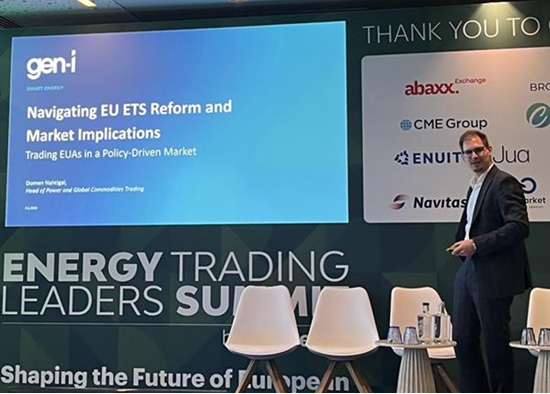
Carbon traders rethink risk management ahead of July EU ETS review
Upcoming reforms to the European Union Emissions Trading System (EU ETS) could reshape carbon market dynamics and force traders to focus more heavily on policy scenarios, according to a senior carbon trader.
Zak Jakubowski
3rd June, 2026
SEBI’s ‘dividend cap’ on clearing houses traps excess capital without benefit - expert
A plan to cap the dividend earned by stock exchanges from their clearing subsidiaries is reportedly under consideration by a panel constituted by the Securities and Exchange Board of India (SEBI), according to a report by Economic Times.
Aravind Bulusu

3rd June, 2026
Marex opens Japan office in APAC push
The London-based brokerage and clearing firm has launched operations in Japan, marking a significant expansion of its Asia Pacific strategy and strengthening its presence in one of the region’s most established capital markets.
Narayani Srinivasan