Low Touch in Derivatives: The Electronification of Expertise
19th March, 2019

By Chris Monnery, Global Head of Low Touch Order Management Business Development at ION Markets
Recently, I explained why 2019 will be the year that the low-touch channel opens up in derivatives. The question remains: if the buy side is looking for a greater degree of efficiency on their high-touch order flow, and this is delivered through a shift to low-touch trading, what does this actually mean and how do the Futures Commission Merchants (FCMs) handle this change? Electronic trading is no-touch today. It's an impersonal channel that’s as far away as you can get from what the client pays for over high-touch. In contrast, low-touch is something very different from the current electronic flow. Low-touch combines the straight-through of electronic trading with the service and oversight of a high-touch trader. However, at this point, organisational and technological barriers to achieving this still remain. From an organisational perspective, there are some fairly obvious requirements to this transition, and luckily something that brokers already have substantial bench strength – Trader expertise. The breadth of algos available to the buy side are growing, but without applying a trader's knowledge over an electronic channel, it's going to be hard for the broker to differentiate their service from the next choice on the buy side order ticket. And without this, they will be unable to gain the levels of efficiency low-touch brings to both the buy and sell sides. That said, a structural challenge exists: the majority of FCMs aren’t aligned to allow high-touch traders to manage anything other than high-touch orders. By definition therefore, they have little involvement with current algo order flow sent electronically. But this doesn't actually matter. While the order transmission may be the same, the requirements of the order flow – both pre-trade and during the trade – fall squarely on the high-touch desk's skill and knowledge of the market. Just as execution has moved from the pit to the screen, and these traders have moved from the floor to the office, what we're looking at is just a natural progression of the agency trader's responsibilities. New capabilities within the Order Management Systems (OMS) have aided this re-tooling, and essentially enabled traders to manage a greater number of orders. If this sounds scary, seeing tech savvy high-touch traders move into low-touch execution consulting is hardly trailblazing territory. It's something we continue to see in equities as order handling customisation and more personalised service becomes more and more important. From a technology perspective, there are just as many challenges. Historically, FCMs have offered platforms and supported their FIX and house flow using many technology stacks. This has led to a choppy, potentially inconsistent service offering built around order execution terminals. For example, you could have algos in system one that aren’t accessible from system two, and even where the broker has successfully integrated between the two, they simply lack the OMS capabilities needed to support the complex workflows needed in low-touch. This is because current electronic flows can be thought of as Direct Market Access (DMA) to an algo, with the client directly targeting the canned strategy on a no-touch basis. Even existing OMS providers have not delivered the keys to open the low-touch door. But this is coming. Just as the last couple of years in equities has been about the increasing sophistication of low-touch workflows, 2019 will see this adoption start to play out in derivatives. Futures people – and I still count myself in this group despite focusing on both equities and derivatives – don't like to think that equities are leading the direction of our business. But it's time to leave the ego at the door. If standing on the shoulders of giants is good enough for Newton, we should be able to accept that we'll be able to see more and move faster than if we head down the road ourselves. After all, the prophetic story that the world of agency derivatives trading is moving electronic that put the fear of God into many a high-touch trader is actually playing out to a different – and remarkably familiar – ending. This is not the nightmare it was once predicted to be, rather a recognition that for derivatives, low-touch is about the efficiency of high-touch. As FCMs battle to differentiate their trading capabilities, the focus falls squarely on having the right trading expertise, delivered with the right technology.
Related Articles
All Insights3rd June, 2026
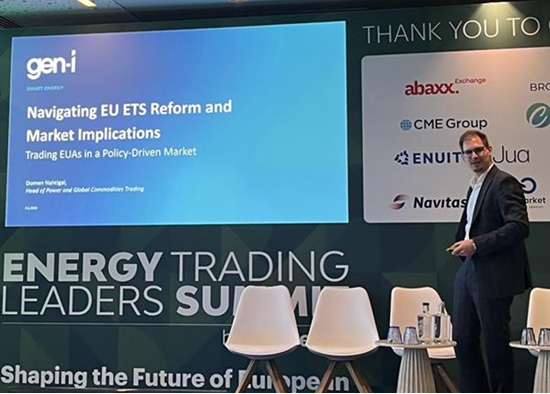
Carbon traders rethink risk management ahead of July EU ETS review
Upcoming reforms to the European Union Emissions Trading System (EU ETS) could reshape carbon market dynamics and force traders to focus more heavily on policy scenarios, according to a senior carbon trader.
Zak Jakubowski
3rd June, 2026
SEBI’s ‘dividend cap’ on clearing houses traps excess capital without benefit - expert
A plan to cap the dividend earned by stock exchanges from their clearing subsidiaries is reportedly under consideration by a panel constituted by the Securities and Exchange Board of India (SEBI), according to a report by Economic Times.
Aravind Bulusu

3rd June, 2026
Marex opens Japan office in APAC push
The London-based brokerage and clearing firm has launched operations in Japan, marking a significant expansion of its Asia Pacific strategy and strengthening its presence in one of the region’s most established capital markets.
Narayani Srinivasan