Editorial: Optimism can be found elsewhere
10th November, 2017

On the Italian economy and Brexodus
Team FOW was in Milan this week, for the first edition of our local trading event on Wednesday. Although we’d been hoping for more sunshine during our stay, the event was marked by considerable optimism about the state of the European market place in general and the Italian markets in particular.
The Italians expect GDP growth to return to an annualised 1.4%, innovation is on the rise and we heard through the grapevine that the Italian government is actively incentivising Italian workers living and working in our fair city to return to the motherland.
Political turmoil is likely to return to the country, just like anywhere else, but investor sentiment is on the up and Italy, formerly one of Europe’s poorest performing economies, is making a steady recovery.
To be sure, Ireland, France and Frankfurt are not the only places vying for post-Brexit business and the European Commission expects the Eurozone economy to expand by 2.2% this year, up from 1.7% six months ago. Growth of the British economy, meanwhile, is expected to further slow to anywhere from 1.3% (according to Brussels) to 1.7% (according to the Bank of England) in 2018.
Full disclosure, I’m a biased observer with a European passport, but it cannot be denied that those Brits who are bullish on Brexit have seen their ranks significantly thinned in the last few months.
The clock is ticking on the initial round of negotiations, European businesses are planning to scale back orders from UK suppliers and home grown business lobby groups have called for clarity on a transition deal, telling Mrs May to agree on a deal before the end of the year.
About an hour ago, Michael Barnier told reporters in Brussels that Britain has about two weeks to make concessions, or trade talks would be further delayed until next year. Lord Kerr, meanwhile, the author of the best-known article of the Lisbon Treaty, has said that Brexit is still reversible, if the people want it to be.
Whatever Mrs May and Mr Davis end up doing with their limited time and options, the Brexodus has already begun and negotiations at this point are likely more a matter of damage control than anything else. In Italy, meanwhile, business is booming.
Related Articles
All Insights3rd June, 2026
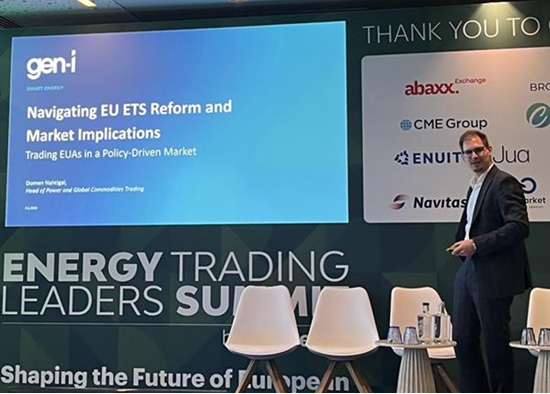
Carbon traders rethink risk management ahead of July EU ETS review
Upcoming reforms to the European Union Emissions Trading System (EU ETS) could reshape carbon market dynamics and force traders to focus more heavily on policy scenarios, according to a senior carbon trader.
Zak Jakubowski
3rd June, 2026
SEBI’s ‘dividend cap’ on clearing houses traps excess capital without benefit - expert
A plan to cap the dividend earned by stock exchanges from their clearing subsidiaries is reportedly under consideration by a panel constituted by the Securities and Exchange Board of India (SEBI), according to a report by Economic Times.
Aravind Bulusu

3rd June, 2026
Marex opens Japan office in APAC push
The London-based brokerage and clearing firm has launched operations in Japan, marking a significant expansion of its Asia Pacific strategy and strengthening its presence in one of the region’s most established capital markets.
Narayani Srinivasan