Are asset managers still walking the VM tightrope?
9th June, 2017

Asset managers have until the start of September to make the changes needed for VM allocation
By Jonathan Adams, senior practitioner at Delta Capita
Anyone else wondering how the buy-side is getting on with variation margining? Remember all the speculation about how any firm missing the March 1 European Market Infrastructure Regulation deadline could have certain derivatives trades shut down?
Three months on, while we are yet to see the hell in a handcart moment, many asset managers are still renegotiating thousands of individual collateral agreements with their counterparties. An additional six months breathing space provided by European Supervisory Authorities (ESAs) does not change the fact that a number of issues, which should have been addressed, are still up in the air. Take the legal headache as a starter for ten. A number of asset managers are still trying to renegotiate replacement agreements with their various counterparties. Margin calls on transactions executed post March 1 under the new agreements must be issued and paid in the individual currencies rather than a single margin call in a ‘home’ currency.
On top of all the legalese, there is the operational and IT burden to consider. To start with, the existing margining applications, across a number of buy-side participants, are still not up to scratch. Simply trying to deal with this problem manually, as certain firms have tried to do, only places an overwhelming burden on the operational teams responsible for margin calls. Alternatively, an asset manager would have to implement the highly time-consuming task of implementing a new application.
There are, of course, challenges right across the industry at the moment – especially for the banking and broker-dealer community. Although when it comes to the exchange or variation margin, asset managers appear to have their collective heads in the sand. Perhaps some still think that the global custodians will step in. But the truth is that the longer it takes the buy-side to find a solution, swaps trading volumes will continue to fall, and it will become harder to hedge foreign exchange and interest rate risk.
There is, however, an opportunity for asset managers to utilise securities as collateral more effectively to manage their liquidity risk. For example, they can use securities as collateral to meet margin obligations. New platforms are emerging to temporarily transform collateral to meet the eligibility requirements of the obligations to either cash or High-Quality Liquid Assets. And because these platforms enable peer-to-peer activity, asset managers do not need to rely on banks. Moreover, the triparty agents commoditise securities collateral to make it as convenient as cash. Combine this with the availability of vendor solutions and consultancy services, there is tangible opportunity for the buy-side to reduce cost and add to their bottom lines. As a case in point, utilities are emerging enabling buy-side clients to outsource the margining process. As a result, firms can benefit from shared ‘pay for use’ technology, regulatory compliance and expertise. Certain firms have even been offering up cloud services that allow asset managers to integrate their margin and portfolio applications to minimise any disruption.
The variation margining challenge may be most front of mind currently, but it is just one part of the evolving collateral management landscape. With this in mind, surely those that adopt an intelligent and dynamic solution now, will be best placed to reduce the inherent risks associated with any further derivative contract changes. Finding a solution that manages any functional and rapid change wouldn’t just be beneficial to variation margining, it would also be a prerequisite to using collateral more efficiently for future endeavours.
Related Articles
All Insights3rd June, 2026
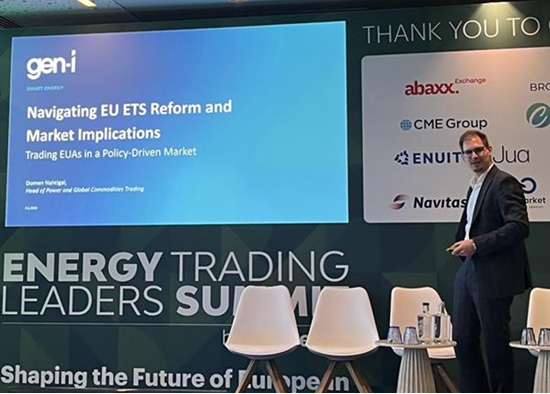
Carbon traders rethink risk management ahead of July EU ETS review
Upcoming reforms to the European Union Emissions Trading System (EU ETS) could reshape carbon market dynamics and force traders to focus more heavily on policy scenarios, according to a senior carbon trader.
Zak Jakubowski
3rd June, 2026
SEBI’s ‘dividend cap’ on clearing houses traps excess capital without benefit - expert
A plan to cap the dividend earned by stock exchanges from their clearing subsidiaries is reportedly under consideration by a panel constituted by the Securities and Exchange Board of India (SEBI), according to a report by Economic Times.
Aravind Bulusu

3rd June, 2026
Marex opens Japan office in APAC push
The London-based brokerage and clearing firm has launched operations in Japan, marking a significant expansion of its Asia Pacific strategy and strengthening its presence in one of the region’s most established capital markets.
Narayani Srinivasan