Less regulation not the answer for foreign banks in US
17th November, 2016
Deutsche Bank analysts say there is a "need to optimise" foreign banks' US franchises
A reduction in regulatory complexity under a Trump administrationwon’t compensate for below par returns for foreign banks operating in the US.
On average, DeutscheBank analysts say major foreign lenders have 20% of their capital ($160bn) investedin the US with sub-par mid-single digit returns.
And a Trump administration, which has stated its desire to roll back financial regulations including Dodd Frank, may not be the answer to their problems.
“There’s a need to optimise foreign banks' USfranchises,” analyst Kinner Lakhani wrote in a note to clients.
“We see thelikely paths as right-sizing of US ambitions, 'self-help' or an 'opportunistic' strategy of partnerships or bolt-on acquisitions.”
Credit Suisse and HSBC's US operations were loss-making in the first nine months of 2016 while UBS' stronger returns were based on tax writebacks.
The relatively more profitable FBO franchises were the likes of Barclays, BBVA, BNP Paribas and MUFG albeit still sub-scale and making sub-par returns.
Deutsche Bank’s operations in the US have also been profitable this year.
Lakhani’sinsights are based on the financial statements of the banks' intermediateholding companies (IHCs).
Under the newIHC structure, foreign banking organisations (FBOs) are reporting thecapitalization and profitability of their US operations for the first time.
“While tooearly to say, we believe that the FBO regulation is likely to remain intactimplying a shift from home to host (ie US) regulation," Lakhani added.
"Moreover, weexpect upward pressure on ‘go to’ leverage ratio requirements which could resultin further capital ‘trapped’ in the US, notably for the likes of Barclays, UBS and Credit Suisse.
"The quid proquo of this could be a reduction in regulatory complexity although we believethat this is likely to be a necessary but insufficient offset against thesub-par returns."
Related Articles
All Insights3rd June, 2026
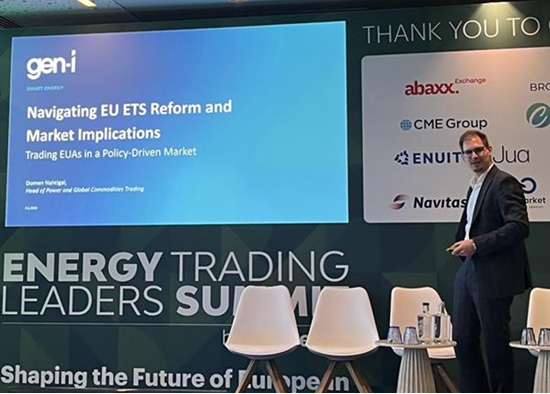
Carbon traders rethink risk management ahead of July EU ETS review
Upcoming reforms to the European Union Emissions Trading System (EU ETS) could reshape carbon market dynamics and force traders to focus more heavily on policy scenarios, according to a senior carbon trader.
Zak Jakubowski
3rd June, 2026
SEBI’s ‘dividend cap’ on clearing houses traps excess capital without benefit - expert
A plan to cap the dividend earned by stock exchanges from their clearing subsidiaries is reportedly under consideration by a panel constituted by the Securities and Exchange Board of India (SEBI), according to a report by Economic Times.
Aravind Bulusu

3rd June, 2026
Marex opens Japan office in APAC push
The London-based brokerage and clearing firm has launched operations in Japan, marking a significant expansion of its Asia Pacific strategy and strengthening its presence in one of the region’s most established capital markets.
Narayani Srinivasan