FSB praises progress of benchmark reforms
9th July, 2015
Regulators have made progress in spotting potential risk free rate benchmarks
The Financial Stability Board (FSB), the internationalbody tasked with coordinating the work of national financial authorities, has praisedthe progress made in reforming major interest rate benchmarks including thedevelopment of alternative risk-free rate benchmarks.
The FSB,chaired by Bank of England governor Mark Carney, published on Thursday its interimprogress report on reforming major interest rate benchmarks and theimplementation of the FSB recommendations issued in July 2014.
The report said that in the past yearadministrators for the most widely used Inter-Bank Offered Rates (Libor, Euribor, Tibor) had alltaken major steps to strengthen the benchmarks including reviews ofmethodologies, data collection exercises and feasibility studies.
FSB also noted that although itsrecommendations were focused on the major benchmarks many other jurisdictionsincluding Australia, Canada, Hong Kong, Mexico, Singapore and South Africa hadall taken steps to steps reforming rates in their own jurisdictions.
In terms of the development of alternativerisk free rate benchmarks, the report said national regulators had made“concrete progress in identifying potential” benchmarks that could provesuitable risk-free reference rates.
However, the regulator said nationalauthorities needed to consider the merits of developing risk free rate acrossthe major currencies to facilitate cross-currency transactions including FXswaps.
In its original report the FSB recommendedthe industry adopt a “multi-rate approach,” involving the strengthening ofexisting benchmarks and the development of alternative risk free referencerates.
Risk free reference rates unlike their IBORcounterparts, which include bank credit risk, are based on secured creditmarkets or unsecured borrowing by sovereigns with little chance of default makingthem effectively credit risk free.
Regulators said these benchmarks would bemore appropriate for pricing many derivatives transactions, particularly as demandand reliance on secured funding grows.
European authorities the EU Commission,Council and Parliament are currently finalising the EU’s financial benchmarkrules after a key European parliament vote in May cleared way for discussionsto start.
The rules were originally proposed by the Commission in September 2013 but since then alternative rules have been drawn up by the other main EU institutions, the Parliament and Council.
The reforms in benchmark regulationwill be discussed at length at FOW’s regulation event being held atthe Grange City Hotel on September 8. To find out more about the event or to register, please visit FOW Events.
Related Articles
All Insights3rd June, 2026
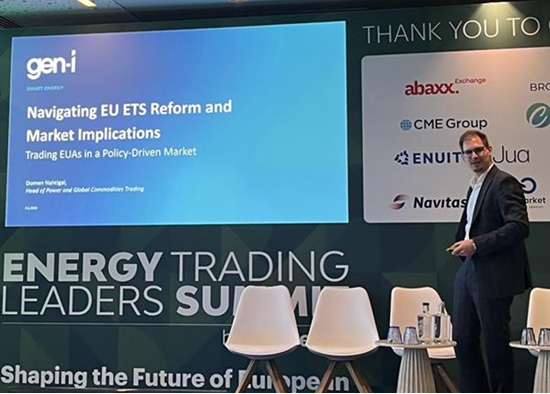
Carbon traders rethink risk management ahead of July EU ETS review
Upcoming reforms to the European Union Emissions Trading System (EU ETS) could reshape carbon market dynamics and force traders to focus more heavily on policy scenarios, according to a senior carbon trader.
Zak Jakubowski
3rd June, 2026
SEBI’s ‘dividend cap’ on clearing houses traps excess capital without benefit - expert
A plan to cap the dividend earned by stock exchanges from their clearing subsidiaries is reportedly under consideration by a panel constituted by the Securities and Exchange Board of India (SEBI), according to a report by Economic Times.
Aravind Bulusu

3rd June, 2026
Marex opens Japan office in APAC push
The London-based brokerage and clearing firm has launched operations in Japan, marking a significant expansion of its Asia Pacific strategy and strengthening its presence in one of the region’s most established capital markets.
Narayani Srinivasan