ANALYSIS: Deutsche Boerse sees clearing boost from active account reforms
29th October, 2025
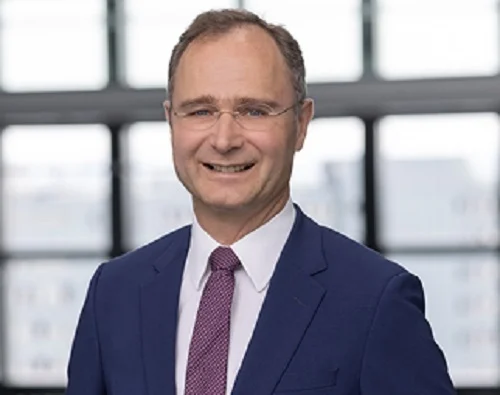
Deutsche Boerse is sticking to projections of growth in its fixed income franchise in the coming year, partly fuelled by a jump in regional clearing as firms look to comply with new European rules.
Speaking on Tuesday as the firm presented third quarter results, the German group's chief executive Stephan Leithner said the implementation of the Active Account Requirement (AAR) rules in June has so far had a “relatively muted” impact on volumes despite a jump in clients onboarding ahead of the regulation.
The AAR is part of the updated European Market Infrastructure Regulation (EMIR) designed to reduce European firms' reliance on London-based markets for trading and clearing Euro-denominated interest rate derivatives.
“We are already seeing initial benefits from AAR under EMIR, for example in over-the-counter (OTC) clearing with a noticeable step up in volumes, and this puts us on track with our fixed income roadmap for further momentum in the coming months,” Leithner (pictured) said in a presentation. “As we have explained before, clients have some flexibility for activating accounts but the overall potential has not changed.”
The AAR rules mandate clearing of a portion of the most traded euro and Polish Zloty denominated interest rate derivatives at a European clearer such as Deutsche Boerse-owned Eurex. The number of firms onboarded by the Frankfurt-based clearing house is now 1,600, including 650 this year, but the new accounts are yet to become meaningfully active, Leithner added.
“It is fair to say that the activation rate of those accounts is still relatively muted so it's overall around 20%,” he said in response to an analyst question. “However what we do recognise now is that, after technical implementation standards have come out, clients have started to [make] specific plans as to how to route their flows. So we do expect activity to increase next year.
“Bear in mind on this topic that the activation requirement needs to be fulfilled throughout the first full year, so basically until May of next year. So the customers still have time and they are taking that time to organise themselves properly but we do expect a significant increase of activity in the beginning of the next calendar year.”
Deutsche Boerse reported on Monday an 11% year-on-year increase in fixed income revenue for the third quarter to €122 million (£107m). That included the OTC clearing business, which in September saw a 37% increase in notional outstanding to €46.7 trillion, according to exchange figures.
The firm in 2023 launched its "Horizon 2026" three year plan, which included €300 million in additional net revenue by the end of next year. In December 2024, the firm said it had met a third of that target, leaving the majority of the increase due from 2025 and 2026.
The exchange group’s commodity business, which saw third-quarter revenue increase 10% year-on-year to €139 million, is also poised to benefit from a rise in artificial intelligence (AI) use, Leithner said.
“We are seeing positive secondary effects in our core businesses, for example in our commodity business,” he added. “Europe’s power demand is estimated to increase 10% to 15% due to AI data centre energy consumption… AI will drive further non-correlated trading and small size high volume trading in all of our asset classes.”
Speaking on a panel at LME Week in London, the founder and chief executive of advisory firm Traubenbach Associates, said copper could experience a long-term spike in demand due to AI power demands.
"AI will have an immense impact, I’d love to be an electricity trader because of the impact AI is having,” Ken Hoffman said this month. “AI data centers use ten times the power of crypto data centers, which we talked about a few years ago, so the impact that you will see from AI on copper and infrastructure… will be absolutely amazing, but I think that impact will be in the future not at present.”
Leithner added: "Let me emphasise this – it is certainly not a disruption risk, but it is a powerful enabler of revenue growth and operational efficiency,” he said. “We have performed an AI assessment across the group and the results are very clear, we see our overall portfolio as extremely robust because we operate regulated system critical infrastructure at scale that AI cannot replace.
“Instead, we are well positioned to capitalise on the AI opportunity, our cloud-first infrastructure strategy coupled with our current cloud adoption rate of over 74% has laid the groundwork for rapid, cost effective and secure scaling of AI.”
Related topics
Related Articles
All Insights22nd May, 2026
LSEG welcomes EC’s push for capital market integration
The exchange group said that modernised settlement and centralised supervision frameworks for central counterparties (CCPs) and index providers are essential to improving the competitiveness of European capital markets.
Narayani Srinivasan

22nd May, 2026
ESMA chief points to consistent supervision to tackle EU market fragmentation
European Securities and Markets Authority’s (ESMA) chair Verena Ross stressed the need to revisit the regulator’s rulebook on market integration, enhanced supervision and investor protection to ensure that it remains proportionate in a competitive economic environment.
Aravind Bulusu
22nd May, 2026
Polymarket lobbying to launch prediction market in Japan-report
The US based prediction market has appointed a representative in Japan and is laying the groundwork to lobby for prediction markets launch in the Asian country, Bloomberg reported.
Aravind Bulusu